



Today we’re taking on two key elements that are causing quite a bit of excitement in the aquarium world: nitrates (NO3) and phosphates (PO4). If you’ve ever wondered why your aquarium looks like an algae plantation or why plants grow slower than you’d like, this article is for you. We’ll explain what NO3 and PO4 are, where they come from, how they affect your aquarium and, most importantly, how to control them. Whether you’re just a beginner to aquariums or have years of experience behind you, you’ll find something here for you. Here we go!
What are NO3 and PO4?
Let’s start with the basics. Nitrates (NO3) and phosphates (PO4) are chemical compounds that play a key role in the aquarium ecosystem. They are macronutrients, i.e. substances that plants need in larger quantities to grow healthily. But beware – balance is the key word here. Too much or too little of these elements can cause chaos in the tank.
Nitrates (NO3) is the end product of the nitrogen cycle in an aquarium. It all starts with fish feces, food scraps or dead plants, which decompose to form ammonia (NH3). This one is toxic, but fortunately nitrifying bacteria (like Nitrosomonas and Nitrobacter) convert it first into nitrites (NO2) and then into nitrates. NO3 is already much less harmful, but in excess it can cause problems, as we’ll discuss in a moment.
Phosphates (PO4), on the other hand, are phosphorus compounds that enter the aquarium from a variety of sources: from fish food to decaying organic matter to tap water. Phosphorus is essential for plants because it is part of their DNA, enzymes and supports processes such as photosynthesis. The problem arises when there is too much phosphate – that’s when the algae start the party, and you have green soup in the tank.
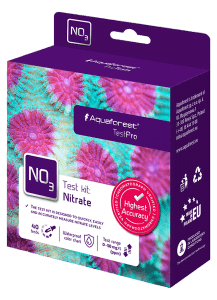
Where do nitrates and phosphates come from?
Understanding where NO3 and PO4 come from is the key to controlling them. Here are the main sources of these compounds:
- Fish feces and food residues: Fish produce ammonia, which is converted to nitrates in the nitrification process. Food scraps that have not been eaten decompose, releasing both NO3 and PO4.
- Tap water: In some regions, tap water already contains nitrates and phosphates. It is worth checking this with tests before you pour it into the aquarium.
- Aquarium Fertilizers: If you use fertilizers for plants, you may unknowingly raise NO3 and PO4 levels. For example, the popular KNO3 fertilizer provides nitrates.
- Decomposition of plants and algae: Dead plant leaves or algae that decompose in the tank release phosphates and nitrogen compounds.
- Substrate: Some substrates, like ADA Amazonia, can release a lot of nutrients at first, which raises NO3 and PO4 levels.
Why NO3 and PO4 are important?
Nitrates and phosphates are like fuel for your aquarium plants. Without them, your plants will become stunted, leaves will yellow, and growth will stall. But their impact goes beyond plants:
- Plants: NO3 is a building block for chlorophyll and proteins, and PO4 supports energy processes. Optimal concentrations (NO3: 10-20 mg/l or 10-20 ppm for plant aquariums, 5-10 ppm in low-tech, while PO4: 0.5-2 mg/l or 0.5-2 ppm [usually 1-1.5 ppm in plant aquariums, 0.2-1 ppm in general aquariums]) make plants grow lush and healthy.
- Algae: Excess NO3 and PO4 are an invitation to algae. In particular, the ratio between these elements (the so-called Redfield ratio, which we’ll talk about shortly) matters. If the balance is disturbed, algae can take over.
- Fish: Nitrates in concentrations above 50 mg/L can be harmful to sensitive fish species, causing stress or disease. Phosphates by themselves are not toxic to fish, but excess phosphates promote algae, which reduce oxygen levels in the water.
The Redfield ratio: the key to nutrient balance
The topic of NO3 to PO4 ratio, called the Redfield ratio, often comes up on aquarium forums. In short, it’s about the ratio of nitrogen to phosphorus to maintain a healthy ecosystem. In marine tanks, a ratio of 16:1 (nitrogen:phosphorus) is ideal, but in freshwater plant aquariums, a ratio of 10-15:1 is more common.
Example? If you have NO3 at 15 mg/l, then PO4 should be around 1-1.5 mg/l. Too much phosphate with low nitrate (or vice versa) can lead to algae infestation, especially cyanobacteria. Therefore, it is a good idea to test the water regularly and adjust fertilization.
How to measure NO3 and PO4?
Don’t guess – test! Aquarium tests for NO3 and PO4 are a must. We recommend kits from reputable brands. They are easy to use and give reliable results. How does it work?
- Take a water sample from the aquarium.
- Add reagents according to the instructions.
- Compare the color of the water with the color scale.
Strip tests are less accurate, so for precision, opt for drop tests or photometers, especially in reef tanks where low nutrient levels need to be detectable. Weekly testing helps you catch changes before they become problems, ensuring nutrient levels will stabilize.
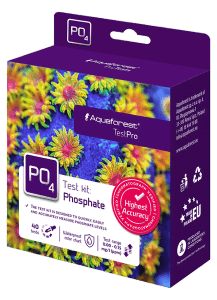
Problems with NO3 and PO4 – symptoms and solutions
High nitrates (NO3)
Symptoms: Green water, filamentous algae, stress in fish, slower plant growth.
Causes: Overfeeding of fish, overstocking, lack of regular water changes, fertilizers with nitrates.
Solutions:
- Water changes: Regular water changes (10% per week) are the easiest way to lower NO3. Use low nitrate water (such as RO).
- Biological filtration: enhance filtration with nitrifying bacteria.
- Fast-growing plants: Plants such as soaker or hornwort absorb nitrates like a vacuum cleaner.
- Filter cartridges that will effectively remove nitrates.
High phosphate levels
Symptoms: Algae infestation (especially red algae), cloudy water, stunted plant growth.
Causes: Excess food, decomposition of organic matter, high PO4 levels in tap water.
Solutions:
- Phosphate removal cartridges: Formulations like Seachem PhosGuard or PhosBond bind PO4 and remove it from the water.
- Limit food: Feed fish sparingly to reduce organic waste.
- Testing tap water: If PO4 in tap water is high, use RO or distilled water.
- Plants: Increase the planting of plants that efficiently take up phosphate, such as pistachio or limnobium.
Too low NO3 or PO4
Symptoms: Yellowing leaves, dwarfed plants, stunted growth.
Causes: Too many plants with few fish, lack of fertilization, too frequent water changes.
Solutions:
- Fertilization: Use fertilizers with nitrates (such as KNO3) or phosphates (such as KH2PO4). Start with small doses and observe the plants‘ reaction.
- Reduce the frequency of water changes: If NO3 and PO4 are near zero, limit your water changes to 5% per week.
- Feeding fish: More fish or more frequent feeding can naturally raise NO3 levels.
How to prevent NO3 and PO4 ?
Prevention is better than cure! Here are tips to keep nitrates and phosphates in check:
- Regular testing: Monitor water parameters weekly to catch deviations quickly.
- Proper fertilization: Adjust fertilizer dosages according to the needs of the plants. If you have a high-tech aquarium withCO2 and strong lighting, you need more NO3 and PO4than in low-tech.
- Good filtration: a filter with a large biological surface area is home to bacteria that help with the nitrogen cycle.
- Water changes: Regular, but not too large, water changes (10% per week) are the golden mean.
- Cast balance: Too many fish means too much NO3. Too few – not enough nutrients for plants.
- Plants in the aquarium: the more plants, the better they do at absorbing NO3 and PO4.
FAQ – frequently asked questions
1. whether NO3 and PO4 are harmful to fish?
Nitrates at concentrations above 50 mg/l can stress fish, especially sensitive species. Phosphates in themselves are not toxic, but an excess of them promotes algae that reduce water quality.
2. how to lower NO quickly3 and PO4?
The fastest way is to change the water and use filter cartridges. Long-term, plants and good filtration will help.
3. why my plants are not growing, despite high NO3 and PO4?
There may be a lack of other components, such as potassium, iron orCO2. Also check that the ratio of NO3 to PO4 is appropriate (10-15:1).
4. can I use tap water?
Yes, but test it for NO3 and PO4 first. If the levels are high, it is better to use RO water.
Summary
Nitrates and phosphates are an integral part of aquariums. They are like spices in the kitchen – in the right amounts they add flavor, but overdoing it can spoil the dish. The key is to test regularly, adjust fertilization and make sure the tank is balanced. Remember: every aquarium is different, so observe your plants, fish and water parameters. Over time, you will learn to sense what your tank needs. We hope this article has illuminated the topic of NO3 and PO4 for you. If you are looking for tests, fertilizers or preparations to control the parameters, take a look at our store, where we have everything you need to keep your aquarium healthy.