

Feeding fish in a freshwater aquarium – what fish food to choose, how to feed your fish and when to use liquid food? #
Proper feeding of aquarium fish is one of the most important factors affecting the condition of aquarium inhabitants. Even the best filtration, properly selected aquatic plants, and stable water parameters will not keep fish healthy if their diet is poorly balanced or they are given an excessive amount of food. Proper fish nutrition supports resistance to disease, healthy development, vibrant coloration, and the efficient functioning of the fish digestive system. For anyone keeping fish, understanding what fish need and how much food to provide is an essential part of maintaining a healthy aquarium. Most hobbyists use pellet food, flake food, or frozen food on a daily basis. However, liquid fish food is also becoming increasingly popular, as it offers a convenient way to diversify the diet of aquarium fish. This type of foodis particularly useful when caring for fry, new fish, and small fish species that can easily consume fine food particles.
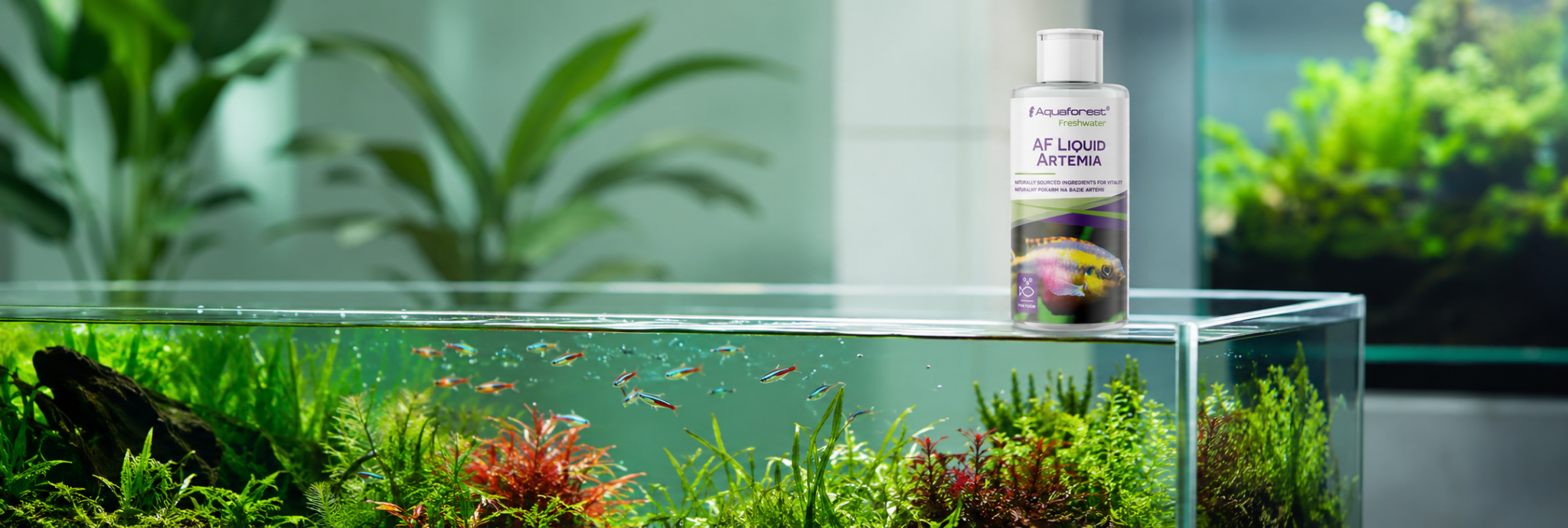
One such product is Aquaforest Liquid Artemia – a ready-to-use food based on Artemia salina, commonly known as brine shrimp. Artemia has long been regarded as one of the most valuable animal-based foods used in aquariums. This brine shrimp food contains high protein, unsaturated fatty acids, and natural carotenoids that support fish development and coloration. In addition, AF Liquid Artemia has been enriched with garlic, which improves appetite and encourages even more demanding or shy fish to readily consume the food. The product is ready to use immediately after opening and does not require thawing or any additional preparation. However, it is worth remembering that even high-quality food for aquarium fish should be part of a varied diet. No single type of fish food provides all nutrients in proportions that are ideal for every fish species, so variety is important when meeting their nutritional needs.
Why a varied diet is important for aquarium fish? #
In nature, fish eat different foods depending on the species. They consume small crustaceans, insect larvae, alga, detritus, and other aquatic organisms. Some types of fish prefer plant matter, others feed almost exclusively on animal-based organisms, while many species are omnivores. Therefore, when planning the diet of aquarium fish, it is important first to understand the nutritional needs of the specific species. A carnivore requires food rich in protein, while herbivores and omnivores may need a greater proportion of plant-based food. Depending on the species, the best results are achieved by varying the diet and combining different types of food.
Best fish food for each type of fish: live food, frozen food and other options #
A well-balanced diet may include:
- high-quality pellet food,
- live food or frozen food,
- liquid foods such as AF Liquid Artemia,
- plant-based supplements tailored to the needs of specific fish species.
This approach provides fish with a broad range of nutrients and helps their digestive tract function properly. This is particularly important for young fish, whose bodies are developing intensively and may need to be fed in a way that supports their increased energy requirements.
Liquid fish food for fry and small aquarium fish #
Liquid Artemia, or brine shrimp, is an excellent supplement to the daily diet. Thanks to its consistency, it is easily consumed by small species and fry, which often cannot yet cope with larger pellet food. Many fish instinctively respond to fine particles suspended in the water, which is why AF Liquid Artemia can also encourage more demanding or shy fish to feed.
Feeding fish in a freshwater aquarium – how to safely use liquid food #
One of the most common questions asked by a beginner hobbyist is what to feed your fish and what portion size is appropriate. The answer is simpler than it may seem, and the amount of food provided at each feeding time is particularly important.
How much to feed your fish and how to create a feeding schedule #
The most important general rule is to feed small amounts of food. Fish should be fed only as much as they can eat within 2 to 3 minutes. It is better to provide small amounts than to add too much food to the aquarium at once. Giving enough to eat without leaving excess food in the tank helps reduce the risk of overfeeding.
In practice, this means that most adult fish can be fed once or twice a day, while fry and very young fish often need to be fed more frequently in small portions. Their digestive system is small, while their energy requirements are significantly higher than those of adult fish. The exact amount of food per feeding therefore depends on the age and needs of the fish. We recommend feeding AF Liquid Artemia once a day in small portions, shaking the container before each use. After opening, the product should be stored in the refrigerator according to the recommendations provided on the label.
It is worth observing the fish during every feeding. If all the fish are interested in the food, actively consume it, and no uneaten food remains after a few minutes, this indicates that the amount of food has been selected correctly. If, on the other hand, some food begins to sink to the bottom and the fish lose interest in it, you should reduce the amount of foodin the next portion. This is particularly important in multi-species aquariums. Fish swimming in the upper areas of the tank tend to consume food faster than bottom feeders, so the feeding method should be adapted to all aquarium inhabitants.
The most common mistakes when feeding fish liquid food #
Liquid fish food is very convenient to use, but like any other type of food – it requires proper dosing. In practice, most aquarium problems are not caused by the quality of the product, but by mistakes made during daily feeding.
Amount of food and a varied fish diet #
- Feeding portions that are too large
The most common mistake is overfeeding fish. Many beginner hobbyists assume that giving more food will result in better fish growth. In fact, too much food has the opposite effect. It is important not to overfeed fish, even when they appear eager to eat. If fish are only able to eat part of the food provided, the uneaten remainder begins to sink to the bottom of the aquarium. Uneaten fish food decomposes, increasing the amount of organic compounds in the water. As a result, water quality deteriorates, ammonia and nitrite levels increase, and biological filtration is placed under greater strain. Decomposing organic matter can also promote algae growth, cause cloudy water, and negatively affect the well-being of fish. Excess food can therefore cause dangerous changes in water conditions. For this reason, it is much safer to feed small amounts than to add too much food at once. If leftovers regularly remain after one feeding, reduce the amount of food provided next time.
- Treating supplementary food as the only component of the diet
Although AF Liquid Artemia is a valuable Artemia-based brine shrimp food, it should not be the only component of the daily diet. Different fish species have different nutritional needs, which is why a varied diet produces the best results. A good solution is to combine different products – high-quality pellet food, flake food, liquid food, and, when needed, frozen food or live food. This allows the fish diet to more closely reflect what fish eat naturally every day. A varied diet supports the proper functioning of the fish digestive system, improves resistance to disease, promotes more vibrant coloration, and helps provide all essential nutrients. The type of food should always be selected according to the needs of the species.
- Ignoring the manufacturer’s recommendations
Every fish food has been developed with a specific method of use in mind. There is no reason to increase the dosage “just in case,” because giving too much food will not make fish grow faster. We recommend feeding AF Liquid Artemia in small amounts and storing the product in the refrigerator after opening. Following these recommendations helps maintain its high quality and ensures safe use.
- Checking water quality too infrequently
A well-maintained aquarium requires regular observation. It is worth paying attention not only to fish behavior but also to water parameters and overall water quality. If water quality deteriorates after changing the feeding method, the filter needs to be cleaned more frequently, or algae begin to appear, this may indicate that too much food is entering the aquarium. In such a situation, it is best to reduce the amount of food and carefully observe the fish for several days. Regular monitoring of water parameters makes it possible to detect increases in ammonia or nitrite levels before they begin to negatively affect the health of aquarium inhabitants.
- Improper product storage
Another common mistake is improper fish food storage. Liquid products require different storage conditions than most dry foods. After opening, AF Liquid Artemia should be stored in the refrigerator. This allows it to retain its properties and high quality throughout the entire period of use.

Observing fish helps you adjust the feeding method #
There is no single universal feeding routine that will work in every aquarium. Everything depends on the number of inhabitants, the size of the tank, and the fish species living in it.
Feeding aquarium fish and the method of providing food #
During daily feeding, it is worth checking whether all fish have access to the food. In multi-species aquariums, fish swimming near the surface often consume food faster than bottom feeders. If some of the inhabitants remain hungry, it may be worth changing where you dispense food or dividing it into two small portions.
Fish behavior after feeding is also a useful indicator. Healthy fish are active, readily consume food, and show no signs of stress. If the fish are interested in the food and no uneaten leftovers remain in the aquarium after a few minutes, this means that the portion size has been selected correctly.
Food for ornamental fish – the foundation of a healthy aquarium #
Feeding aquarium fish properly means much more than simply providing food regularly. It is equally important to adapt the diet to the requirements of individual fish species, choose the right type of fish food, control the amount of food, and maintain high water quality.
AF Liquid Artemia is a valuable supplement to the daily diet of many ornamental fish. This Artemia-based brine shrimp food provides high-quality protein, natural carotenoids, and nutrients that support the development of young fish, the condition of adult fish, and vibrant coloration. Its ready-to-use liquid form makes the product convenient for everyday feeding, particularly when caring for fry and small fish species. For the best results, we recommend feeding small amounts as part of a varied and balanced diet. Regularly observing the fish, monitoring water parameters, and using sensible portions help maintain a stable aquarium, reduce the risk of overfeeding, and create an environment in which fish can develop properly over the long term.