How to winterize your pond – get your backyard pond ready for winter and protect it from freezing temperatures #
Preparing your pond for winter is essential for the health of your fish, plants, and the entire pond ecosystem. As the colder winter months approach, fallen leaves, dying plant matter, and other organic matter accumulate in the water. As these materials decompose, they consume oxygen and may release harmful gases, especially when the pond freezes and restricts gas exchange. To prepare your pond for winter, you should clean the pond bottom and surface, prepare aquatic plants for the colder months, adjust feeding for your pond fish, and inspect the pond pump and filtration system. Maintaining adequate oxygen levels during freezing temperatures is equally important. The work required depends on the pond’s depth, fish population, and equipment. Whether you have a small pond, a koi pond, or a larger garden water feature, proper preparation helps maintain stable conditions throughout winter. The Aquaforest POND range supports water quality and biological balance, making pond care easier throughout the year.
Why should you prepare your pond for winter before it freezes? #
As pond water temperatures fall, fish metabolism slows down and nitrifying bacteria become less active. These bacteria are responsible for converting toxic ammonia and nitrites into less harmful nitrates. When their activity decreases, the pond’s ability to process waste is reduced. This is why it is important to remove excess organic matter before winter to get your pond ready for colder conditions. Its decomposition increases oxygen consumption and can negatively affect water quality. This is particularly important in heavily stocked fish ponds and shallow ponds, which are more likely to freeze during harsh winter weather.
How do freezing temperatures affect water conditions in a winter pond or koi pond? #
Water temperature directly affects fish metabolism and microbial activity. When it drops below approximately 8°C, biological processes slow down significantly, and pond fish generally become less interested in feeding. At this stage, maintaining stable conditions and avoiding unnecessary disturbances are the main priorities to help keep your fishhealthy throughout winter.
How to prepare your pond for winter and protect it from freezing #
It is best to begin cleaning and maintenance in early autumn, before severe frosts arrive. Starting your winterizing preparations early allows you to remove debris gradually and get your pond ready for winter without sudden changes to its environment. This is especially important for pond owners who want to keep their pond in good condition during the colder months.
Remove fallen leaves, sludge, and dead pond plants before winter #
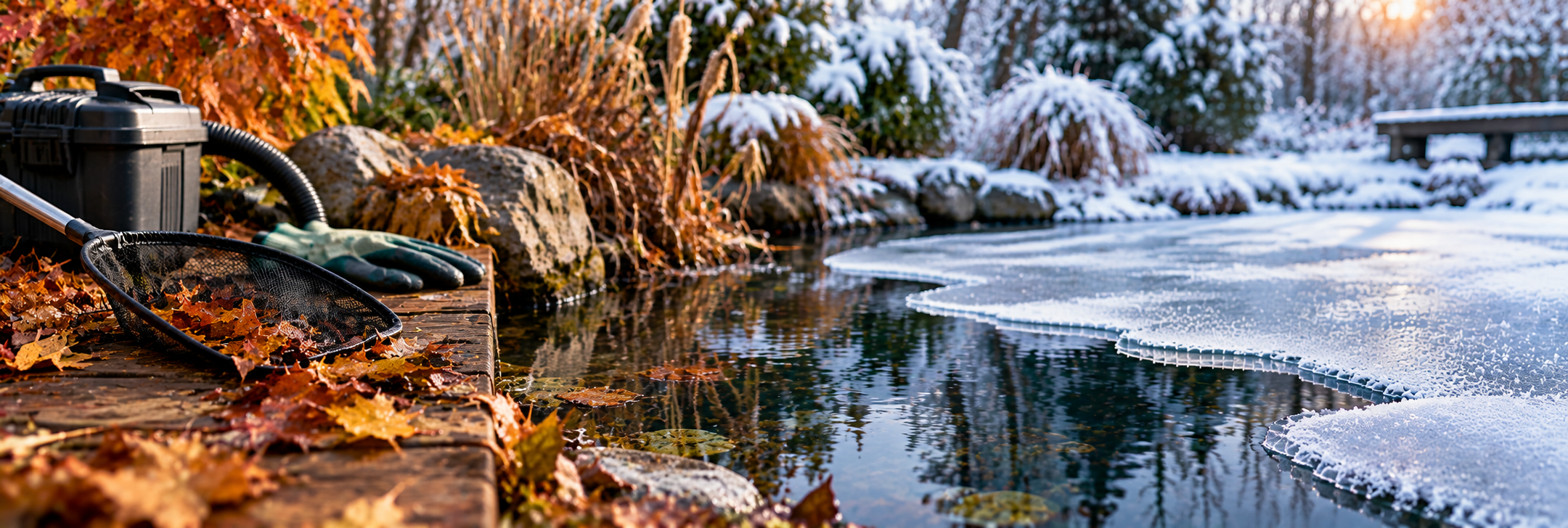
Fallen leaves, uneaten food, and dead plant material sink to the bottom of the pond, where they begin to decompose. Excessive accumulation of this debris increases oxygen consumption and may create unfavourable conditions near the pond bottom. Removing this waste helps keep the water clean and reduces the risk of poor water quality during winter.
Before winter, it is worth taking a few important steps:
- Regularly remove leaves and other debris from the surface water.
- Remove decaying parts of aquatic plants.
- Check the amount of sludge and, if necessary, clean the bottom using a pond vacuum.
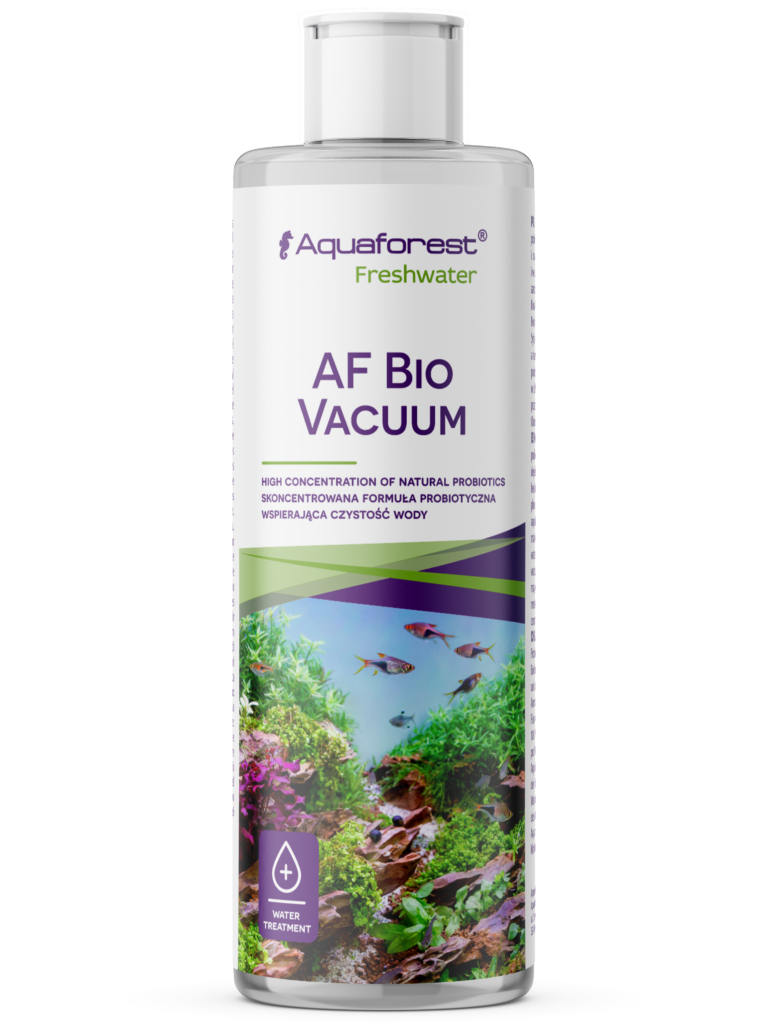
For ponds located near trees, a protective pond cover or pond net can help prevent leaves from falling into the water. It is best to cover the pond before leaves begin to fall heavily, making maintenance easier throughout fall and winter. AF Bio Vacuum can also support pond maintenance. It contains microorganisms that help break down sludge, organic deposits, and plant debris. The product should be used from spring to autumn when water temperatures exceed 8°C, following the manufacturer’s recommendations. Regular maintenance helps keep the pond clean and reduces the amount of waste left to decompose during winter.
Check pond water quality, pump, and filtration before winter #
Before winter, it is important to check the pond’s pH. In ponds containing fish, ammonia and nitrite levels should also be tested to help keep the water in good condition. If the results indicate a problem, identify its cause and make any necessary adjustments gradually, avoiding sudden changes to water parameters. You should also inspect the pump, clean mechanical filtration components, and check the condition of the entire system. This is particularly important if you plan to keep your pond equipment running throughout winter. If biological filtration needs additional support, AF Bio Starter can be used to introduce nitrifying bacteria that support the nitrogen cycle. The choice of products should always reflect the actual needs of your pond. Products designed to support water quality and biological balance are available in the Aquaforest POND range.
Fish in winter ponds – how to keep them safe #
Whether fish can safely overwinter in an outdoor pond depends on their species, condition, pond depth, and winter weather conditions. Koi carp and goldfish can survive the winter in outdoor ponds if they have sufficient space and stable environmental conditions. However, shallow ponds that freeze almost to the bottom may not provide a safe environment. For pond owners, it is essential to keep an area of unfrozen water where fish can shelter during colder periods. This helps protect the pond and fish when temperatures drop and reduces the risk of the pond completelyfreezing.
Pond depth and overwintering fish #
A depth of approximately 80 cm is often used as a general reference point for garden ponds. However, this does not guarantee safe overwintering in every situation, especially when winter sets in and temperatures drop significantly. The required depth depends on local winter temperatures, pond size, and the number of fish. In larger ponds, deeper areas generally provide more stable conditions during cold weather. In deeper areas of the pond, water temperatures remain more stable. Fish can reduce their activity and stay in these areas, where conditions are generally more favourable. The water at the bottom is often warmer than the water near the surface, providing a safer environment during freezing conditions. If a pond is shallow or freezes almost completely, consider moving the fish to a properly prepared indoor tank with filtration and aeration to help them survive the winter safely.
Feeding pond fish before winter #
As temperatures decrease, fish feeding should be reduced gradually. Their metabolism slows, and their ability to digest food becomes limited. When water temperatures remain below approximately 8°C, feeding should generally be stopped. Uneaten food contaminates the water and increases the amount of organic waste, which can negatively affect water quality. During winter, you should not feed your fish simply because they appear near the surface of the water. If a prolonged period of warmer weather occurs, any feeding should take water temperature and the specific needs of the fish species into account. Using a pond thermometer can help you monitor water conditions and determine when it may be appropriate to resume feeding.
How to prevent your pond from freezing completely #
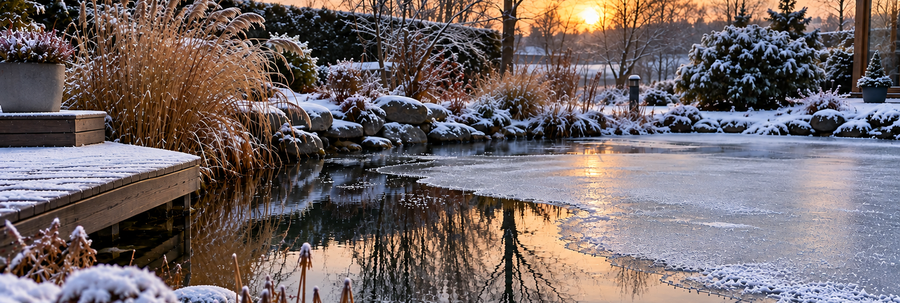
A frozen pond surface restricts gas exchange between the water and the atmosphere. If the ice remains for an extended period, oxygen levels may decrease, while harmful gases produced by decomposing organic matter can accumulate. This can become particularly dangerous when the whole pond is covered with ice for a long time. Maintaining a small ice-free area is therefore particularly important during winter. Using a pond deicer can help keep a hole in the ice and prevent a small area of the pond surface from freezing, allowing gases to escape even when the water freezes around it.
Ice hole, pond aerator, or heater? #
The best solution depends on the depth of your pond, the number of fish, and local weather conditions. When temperatures get really cold, choosing the right equipment can help prevent the pond from completely freezing.
- Pond aerator: Supports gas exchange. An air pump can help maintain oxygen levels, but during winter, the air stone should be positioned relatively close to the surface to avoid excessive mixing of the warmer water near the bottom.
- Pond de-icer float: Helps maintain a small opening in the ice, allowing gases to escape. This is particularly useful when you need to keep a hole open during prolonged freezing conditions.
- Pond heater: Can help prevent a small section of the pond surface from freezing, provided the equipment is designed for winter use. It helps protect a part of the pond from ice formation without heating the entire water volume.
In a typical fish pond, heating the entire volume of water is usually unnecessary. Maintaining gas exchange and stable conditions in deeper areas is more important. Even when exposed to cold air, the warmer water near the bottom should remain relatively undisturbed. All electrical equipment should be used according to the manufacturer’s instructions.
Why should you never break pond ice? #
Never break the ice with a hammer or another heavy tool. Vibrations travelling through the water can cause severe stress to fish. A safer option is to use a dedicated pond de-icer or gently melt a small section of ice using a container filled with warm water. This allows you to keep a small opening in the ice without disturbing the fish. Never pour boiling water directly into the pond or use salt. The ice-free opening should be checked regularly, especially during severe frosts, as it may freeze over again. Regular checks help prevent ice from freezing over the opening and blocking gas exchange.
Pond pump and filter – how to prepare your equipment for winter #
The appropriate way to protect your pond pump depends on the pond’s design and the manufacturer’s recommendations. In many garden ponds, pumps and external filtration systems are switched off before severe frosts, especially if water could freeze inside pipes or filter chambers. If the equipment is not designed for winter operation, it should be switched off, cleaned, and drained according to the manufacturer’s instructions. Pipes, valves, and seals should also be inspected for signs of damage. Equipment stored outside the pond should be kept in a dry, frost-free location.Some pond systems can operate throughout the year, but it is important to confirm that the entire installation is suitable for winter conditions. Strong water circulation can excessively cool deeper areas of the pond, while waterfalls and streams may freeze during severe frosts. If the pump is switched off, adequate gas exchange must be maintained using another method.
Aquatic plants – which should stay and which should be moved? #
In autumn, remove yellowing leaves, decaying stems, and other dead plant material that could increase the amount of organic waste in the pond. However, not all aquatic plants need to be trimmed in the same way. Many frost-resistant species can safely remain in the pond throughout winter. Rushes, reeds, and cattails can play an important role in the pond’s marginal planting areas. Depending on the species and pond conditions, some stems can be left until spring. However, these plants are not a substitute for aeration in heavily stocked ponds. Tropical aquatic plants and species sensitive to freezing temperatures should be moved to a suitable indoor location. For plants grown in containers, check the requirements of each species and provide appropriate overwintering conditions. Water lilies and other plants that overwinter at the bottom of the pond should be placed at a sufficient depth to protect their rhizomes from freezing. In very shallow ponds, it may be necessary to move plant containers to a deeper section.
Winter pond water quality – how to maintain biological balance #
During winter, regularly check the condition of the ice, the water level, and the operation of equipment responsible for gas exchange. Proper autumn preparation reduces the risk of problems, but the pond still needs to be monitored during freezing temperatures. If ammonia levels are elevated, AF Zeolith may be helpful. This natural filtration medium supports the removal of ammonia and heavy metals from the water. It should be used according to the manufacturer’s recommendations, as excessive amounts of zeolite may also remove nutrients needed by aquatic plants. If phosphate levels are elevated, AF Phosphate Minus can be considered. It binds dissolved phosphates, helping reduce conditions that encourage algae growth. All products should be selected based on water test results and the specific needs of the pond. There is no need to use every product at the same time. It is also important not to use AF Bio Vacuum when water temperatures are below 8°C, as the activity of the microorganisms it contains decreases significantly in cold water.
Common mistakes when preparing a pond for winter #
To reduce the risk of problems, avoid these common mistakes:
- Breaking the ice by striking it or disturbing the pond unnecessarily.
- Feeding fish when the water temperature is too low.
- Leaving pumps and pipes unprotected in freezing conditions.
- Making sudden changes to water parameters without testing the water first.
- Allowing large amounts of fallen leaves and decaying plant material to accumulate on the bottom.
Pond care after winter – how to prepare for the new season #
Once the frosts have passed, inspect the pond, remove any remaining debris, and check the condition of your fish. Before restarting the pump and filter, inspect the equipment and make sure the installation is watertight and in good working condition. In spring, regularly monitor water temperature, pH, ammonia, and nitrite levels. Biological filtration takes time to return to full efficiency, so fish feeding should be increased gradually. When water temperatures rise above 8°C, AF Bio Starter can help support the recovery of the pond’s biological balance. It introduces nitrifying bacteria that help restore the proper functioning of the nitrogen cycle.
Proper pond preparation means a safer winter #
Preparing your pond for winter involves removing excess organic matter, getting fish and aquatic plants ready for colder conditions, and checking the pump and filtration system. Maintaining gas exchange when the pond surface freezes is equally important. It is best to begin preparations well before severe frosts arrive. Regular pond monitoring, appropriate fish feeding, and stable water parameters help reduce the risk of problems throughout winter. With proper preparation, your pond will be in better condition when spring arrives, making maintenance at the start of the new season much easier.