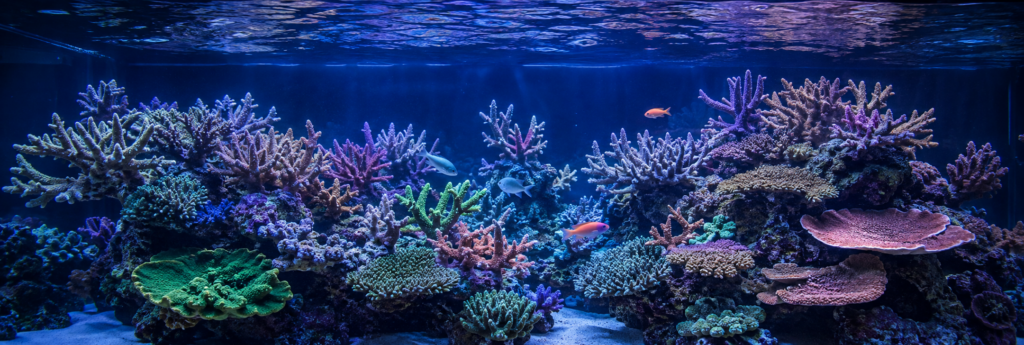

Water change is one of the most essential tasks in maintaining reef aquariums, which are among the most stunning ecosystems. Keeping corals and other marine life thriving requires meticulous control of water parameters, with regular water changes playing a crucial role in sustaining a stable environment.
However, an improper approach to this task can disrupt the delicate biological balance, leading to stress—or even fatalities—among the tank’s inhabitants. So how can you ensure that a water change benefits rather than harms your reef ecosystem? In this article, we’ll explore essential guidelines and practical tips to help you maintain a pristine, thriving saltwater aquarium.
Why is a regular water change in an aquarium essential? #
Over time, the water in a reef aquarium gradually loses its essential properties. The buildup of metabolic waste, uneaten food, toxins, and a depletion of vital trace elements can have a detrimental impact on marine life. Regular water changes play a key role in maintaining a healthy ecosystem by:
- Removing excess contaminants – such as nitrates, phosphates, heavy metals (if supplemented), and detritus.
- Replenishing micro- and macroelements – corals, mollusks, and other marine organisms consume essential minerals like calcium, magnesium, and strontium.
- Stabilizing water parameters – helping maintain optimal pH, salinity, and mineral levels.
- Enhancing the well-being of aquarium inhabitants – fresh water promotes the healthy growth of corals and fish while reducing algae blooms and harmful pathogens.
How often should I change the water in a marine aquarium? #
How often you should perform water changes depends on the size of the aquarium, its stocking density and feeding intensity. The water to be changed should have the same parameters as the aquarium water, in particular temperature, salinity and chemical composition to avoid stressing. The following rules are generally accepted depending on size:
- in small aquaria (up to 100 litres) – it is recommended to change about 10-15% of the volume of water every week,
- in medium-sized aquaria (100-300 litres) – change 10% of the water every 1-2 weeks,
- in large aquaria (over 300 litres) – 5-10% of the water every fortnight.
If the aquarium has a high biological load—such as a large number of fish, corals, or crustaceans—more frequent tank water changes may be necessary. Regularly monitoring key chemical parameters NO₃, PO₄, pH, KH, Ca, Mg. For this, our drop tests and ICP tests will work great. It allows you to adjust the schedule as needed, ensuring optimal conditions for your reef ecosystem.

How much water should I change to keep it safe? #
Changing too much water at once can cause sudden shifts in parameters, which may disrupt the aquarium’s delicate balance. A safe rule of thumb is to replace around 15% of the tank’s volume at a time.
However, if the water is heavily polluted, it’s best to perform several smaller water changes over a short period rather than one large one.
Which water should be used for water changes? #
Ordinary tap water is unsuitable for reef aquariums, as it may contain chlorine, heavy metals, and other impurities harmful to marine life. Instead, the best choice is purified RODI water (reverse osmosis with deionization), to which a high-quality aquarium salt mix is added. This ensures the water remains free of contaminants and provides the necessary balance of minerals for a thriving reef ecosystem.
How to prepare for a water change in a reef aquarium #
- Water filtration – use RODI water with a TDS (Total Dissolved Solids) reading close to zero, ensuring no unwanted dissolved substances.
- Adding salt – choose high-quality aquarium salt and dissolve it according to the manufacturer’s recommendations. To this end, we encourage you to take a look at our range of aquarium salts.
- Checking salinity – the ideal salinity for a reef aquarium is 1.025-1.026 g/cm³ (33-35 ppt), measured with a refractometer or hydrometer. Keep in mind that these values can slightly vary depending on the species in your tank, so always check their specific requirements.
- Warming the water – ensure the new saltwater is at a temperature close to that of the aquarium—around 24-26°C.
- Aeration and mixing – stir the fresh saltwater for several hours using a circulation pump to fully dissolve the salt and stabilize the parameters before adding it to the tank

How to properly change water? #
- Turn off the equipment – before starting, switch off the circulation pump and skimmer to prevent water splashing and unnecessary turbulence.
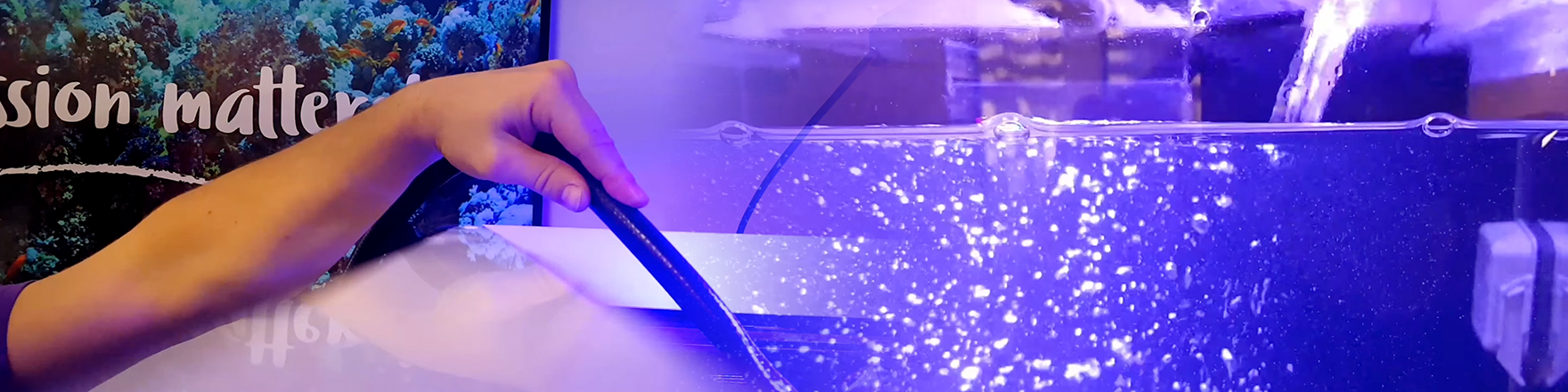
- Remove old water – use a long hose to pump the old water from the tank, focusing on collecting sediment from the bottom.
- Slowly add new saltwater – gradually refill the tank with clean, pre-mixed saltwater, ideally using a pump or hose with a control valve to prevent sudden parameter fluctuations.
- Restart equipment – Once the water change is complete, turn all equipment back on and monitor water parameters for the next few hours to ensure stability.
What should I avoid during water changes? #
- Changing too much water at once – large water changes can cause osmotic shock, stressing marine organisms.
- Replacing water too quickly – rapid changes in temperature and salinity can destabilize the ecosystem.
- Using untreated water – tap water contains chlorine and heavy metals, which are harmful to marine life.
- Incorrect salinity levels – even small deviations can be stressful for corals and other sensitive organisms.
- Failing to monitor water parameters after the change – regular testing helps detect imbalances early and prevents potential issues.
Additional tips for reef tank maintenance (not only for newer reefers): #
- Maintain ecosystem stability – water changes are just one part of reef care. Proper filtration, lighting, and nutrition are equally important.
- Keep an aquarium log – tracking water changes, parameters, and adjustments helps refine your maintenance routine.
- Be patient – sudden changes can harm your tank’s inhabitants. Make adjustments gradually and observe their reactions.
Summary #
Regular, well-executed water changes are essential for a healthy reef aquarium. By properly preparing new water, following best practices, and avoiding common mistakes. You can maintain stable conditions for fish, corals, and other marine organisms. High water quality is the foundation of successful reefkeeping. The better the environment you create, the more stunning your reef will become!