
Introduction #
Sludge in a pond does not appear overnight. It is the result of months—and often years—of accumulating organic matter such as plant debris, fish waste, uneaten food, and dust carried by the wind. Over time, this layer begins to affect water quality, filtration performance, and the overall condition of the pond.
The natural reaction is to want to clean the bottom quickly. The problem is that overly aggressive action can do more harm than the sludge itself. A pond is a closed ecosystem—every intervention affects its biological balance, especially the bacteria responsible for breaking down waste. That’s why effective sludge removal is not about mechanically removing it, but about controlling its sources and supporting the natural processes already taking place in the pond.
Where does sludge come from and why is it a problem #
Every pond produces organic matter—this is natural and unavoidable. The problem begins when its amount exceeds the system’s ability to process it.
At the bottom, the following accumulate:
- fallen leaves and dead plant matter
- fish waste
- uneaten food remnants
- microorganisms and suspended particles
In conditions of limited oxygen, decomposition processes begin to dominate. As a result, compounds are produced that pose a real threat to life in the pond, such as ammonia, hydrogen sulfide, and other toxic gases. These are responsible for unpleasant odors, declining water quality, and stress in fish.
Importantly, sludge is not just dirt—it is also a habitat for bacteria, both beneficial and harmful. That’s why its complete and sudden removal can destabilize the pond’s biological balance.
Why mechanical cleaning often makes the situation worse #
Sludge removal with a pump or manual extraction may deliver quick visual results, but it comes with specific risks.
First of all:
- you remove some of the beneficial bacteria along with the sludge
- you disturb the sediments, releasing toxic compounds into the water
- you disrupt the nitrogen cycle that is responsible for keeping fish safe
In practice, this means that after such cleaning, cloudy water, parameter fluctuations, and an increased risk of algae blooms often occur. From a biological perspective, a much better approach is to gradually reduce sludge through its decomposition rather than removing it all at once.
Biological approach to sludge reduction #
The most stable way to manage sludge is by using microorganisms that convert organic matter into simpler, less harmful compounds.
This process is called mineralization and, unlike decay:
- it does not lead to the formation of toxic gases
- it improves water oxygenation
- it supports biological balance
In practice, this means that instead of cleaning the bottom yourself, you allow the ecosystem to do it for you—only faster and in a controlled way.
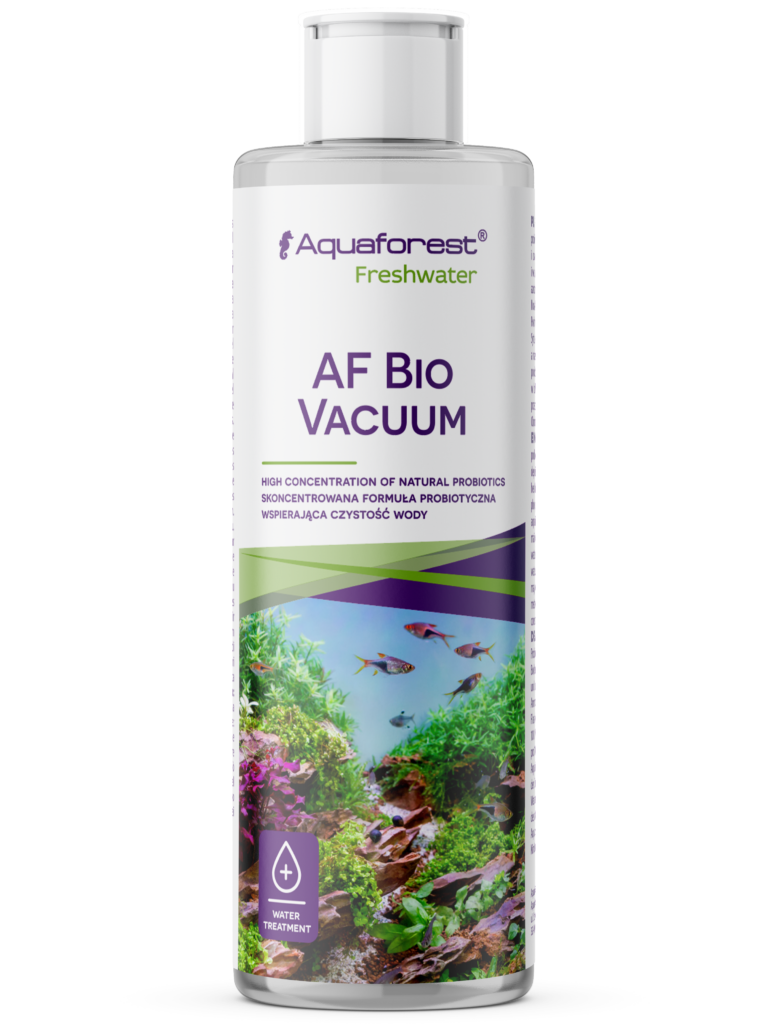
Biological products such as Aquaforest Bio Vacuum contain specially selected microorganisms that:
- break down sludge and bottom sediments,
- reduce decay processes,
- reduce the amount of accumulated organic matter
Regular use allows for gradual reduction of the sludge layer without sudden disruption to the environment.
When and how to act without disrupting the balance #
Timing is crucial here. Bacterial activity depends on water temperature, so it’s best to plan actions when biological processes are operating efficiently.
The best conditions are:
- temperature above 8°C (46°F)
- stable oxygen conditions
- properly functioning filtration
Starting too early (e.g., right after winter) means decomposition processes are limited and the effect is minimal. In contrast, during the peak of the biological season, you can achieve noticeable sludge reduction without destabilizing the pond.
A good practice is also to act in stages: first support the biological processes, then gradually reduce sediments, and finally adjust water parameters if needed. This approach minimizes the risk of sudden changes and helps maintain full control over the process.
Role of the nitrogen cycle in sludge removal #
It’s impossible to discuss sludge without referring to the nitrogen cycle. It is responsible for transforming the toxic compounds produced during the decomposition of organic matter.
The process is simple:
- organic matter → ammonia (toxic)
- ammonia → nitrites
- nitrites → nitrates (much safer)
These transformations are carried out by nitrifying bacteria. If they are lacking or their population is disrupted, the water can quickly become dangerous for fish. That’s why supporting the biological system is essential when dealing with sludge.
Products such as Aquaforest Bio Starter provide the bacteria responsible for this process and help maintain system stability even under increased organic load.
What else is worth doing in parallel #
Reducing sludge is one thing, but it’s equally important to limit the amount of contaminants entering the pond.
In practice, this means a few simple actions:
- regular removal of leaves and dead plant material
- control the amount of food being given
- maintain efficient mechanical filtration
It’s also worth remembering that some contaminants are not visible to the naked eye. Heavy metals, toxins, and excess phosphates also affect water quality and promote algae growth.
In such cases, filtration media can be helpful:
- Aquaforest Zeolith, which binds ammonia and supports filtration,
- Aquaforest Carbon activated carbon, which removes toxins and improves water clarity
- Aquaforest Phosphate Minus a phosphate-reducing product that limits algae growth
These are complementary actions that enhance the effectiveness of biological processes.
Common mistakes #
In practice, sludge problems rarely stem from its mere presence. Much more often, they result from how we try to remove it.
The most common mistakes:
- completely removing sludge from the bottom in a short time
- lack of bacterial support after cleaning
- ignoring water parameters
- using too many products at the same time
Each of these leads to the same outcome: destabilization of the ecosystem—and when that happens, problems return, often on a larger scale than before.
Summary #
Sludge in a pond is not an enemy that needs to be removed immediately, but a sign that too much organic matter has accumulated and that the biological system is struggling to keep up with its processing.
Effective action is about restoring balance:
- supporting beneficial bacteria
- reducing sources of contamination
- gradual reduction of sediments
A pond managed this way does not require constant intervention. The water remains stable, fish stay safe, and the bottom stops being a recurring problem each season.
This approach requires patience, but it delivers something far more valuable than quick results—long-term control over the entire ecosystem.