
Introduction #
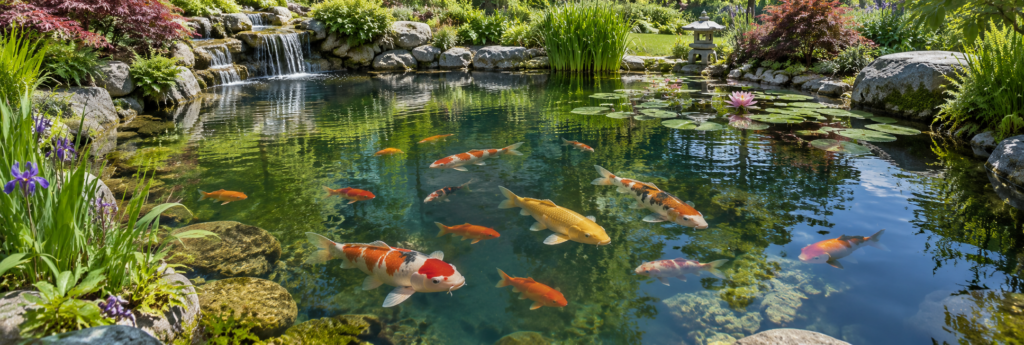
The beginning of the season is the moment when many pond owners want to restore their pond’s perfect appearance as quickly as possible. After winter, the water may be cloudy, a layer of sediment often accumulates at the bottom, and the first rays of sunlight encourage algae growth. The natural reaction is to act immediately.
This is exactly when the most common mistakes occur — mistakes that can lead to problems with water quality, fish health, and the stability of the entire ecosystem in the following months. A garden pond is a relatively small, closed environment. Its balance depends on the activity of beneficial bacteria, water parameters, the amount of organic matter, and the condition of plants and fish.
If any of these elements is disturbed at the start of the season, the effects may be noticeable for many weeks. That is why, in spring, a calm and well-planned approach to pond maintenance is especially important.
Cleaning the pond too early #
One of the most common mistakes is intensive pond cleaning immediately after winter. Many pond owners completely remove sediment from the bottom, clean the filter, and replace a large part of the water in an effort to quickly refresh the pond.
The problem is that, together with the sediment, a significant portion of beneficial bacteria is also removed. These bacteria are responsible for converting toxic ammonia into less harmful nitrogen compounds as part of the nitrogen cycle.
After winter, the bacterial population is already weakened, as low temperatures slow down its activity. If it is additionally removed mechanically, the pond’s biological system has to rebuild itself from the beginning.
Instead of radical cleaning, it is better to act gradually:
- remove larger debris from the surface
- clean only the dirtiest parts of the filter.
- leave part of the sediment as a natural habitat for beneficial bacteria.
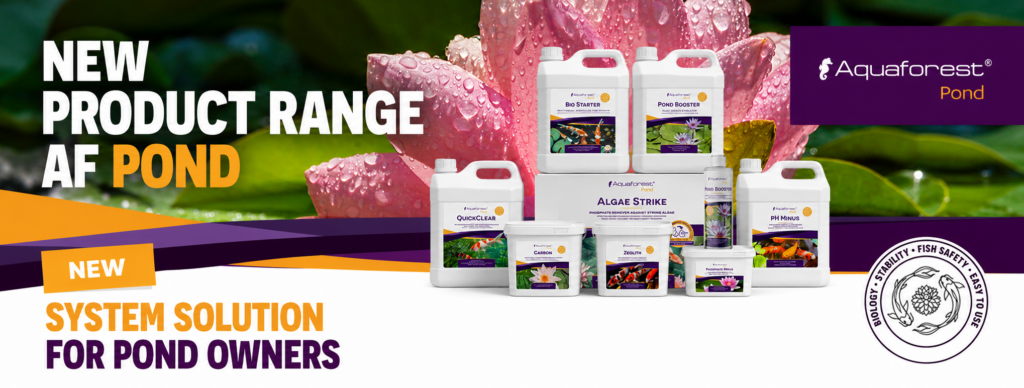
In many cases, it is also enough to support the pond’s biology. Products containing nitrifying bacteria, such as Aquaforest Bio Starter, help stabilize the nitrogen cycle more quickly and reduce fluctuations in water parameters.
Overreacting with chemicals at the first signs of algae #
As soon as the water temperature begins to rise, many ponds experience the first wave of algae — and this is a natural stage. The problem starts when the first green deposits lead to the immediate use of several different products at once.
Algae develop mainly where there is an excess of nutrients in the water, especially phosphates and nitrogen compounds. Removing algae without reducing the source of the problem only brings short-term results.
A much better approach is to stabilize the conditions in the pond.
This primarily includes:
- monitoring phosphate levels.
- reducing excess organic matter.
- improving water oxygenation.
Products that reduce phosphate availability, such as Aquaforest Phosphate Minus, help slow down algae growth and improve water clarity without disturbing the pond’s biological balance.
Feeding fish too early #
In early spring, pond owners often start feeding their fish as soon as they notice them becoming active near the surface. However, fish metabolism is strongly dependent on water temperature. When it is below approximately 8°C, their digestive system works very slowly.
Feeding fish during this period can lead to two problems:
- undigested food may remain in the fish’s digestive system.
- uneaten food sinks to the bottom and begins to decompose.
As a result, additional ammonia and other nitrogen compounds appear in the water. When the pond’s biological filtration is still weak, this can easily lead to a decline in water quality.
The safest approach is to start feeding only when the water temperature consistently exceeds around 8°C and remains at that level for several days.

Ignoring bottom sediment #
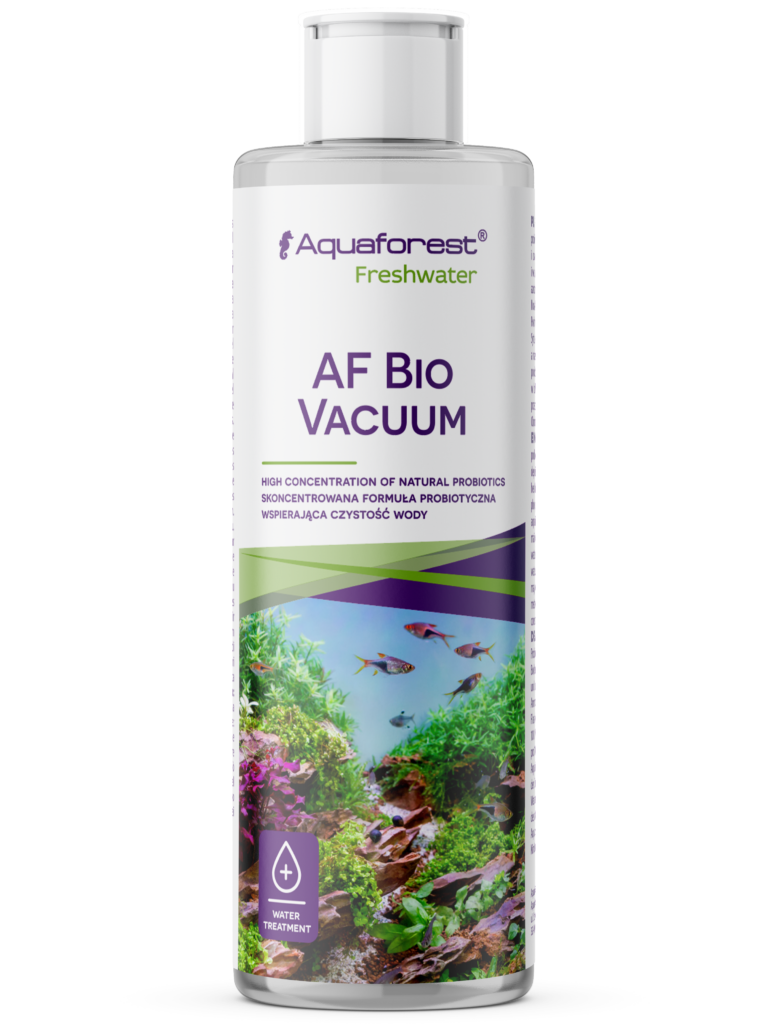
A layer of sludge at the bottom of a pond is a natural occurrence. The problem begins when it is left uncontrolled for several seasons. Bottom sediment is mainly made up of decomposing organic matter, such as leaves, plant fragments, fish waste, and uneaten food. Under favorable conditions, it can lead to the formation of oxygen-depleted zones and the production of toxic gases. In spring, as the temperature rises, decomposition processes speed up. This is when large amounts of ammonia and other nitrogen compounds may be released into the water. In many cases, there is no need to mechanically remove sludge from the entire pond. A much more effective solution can be to support the natural mineralization of organic matter with microorganisms contained in Aquaforest Bio Vacuum, which transform sediment into stable mineral compounds.
Ignoring water parameters #
The final common mistake is focusing only on the appearance of the water. Clear water does not always mean that the environment is healthy for fish. Parameters such as pH, ammonia, and phosphate levels have a direct impact on the stability of the entire ecosystem. For example, at higher pH levels, the toxicity of ammonia increases significantly, which can lead to stress, weakness, and even poisoning in fish. That is why it is so important to maintain pH at a safe and appropriate level, for example with the help of Aquaforest pH Minus. Regular monitoring of basic water parameters makes it possible to detect problems early and react before they become serious.
Spring temperature fluctuations #
It is worth remembering that spring is a period of significant water temperature fluctuations. Warm, sunny days can alternate with cold nights, which affects both the activity of filtration bacteria and fish metabolism, as well as the rate at which organic matter decomposes.
For this reason, pond maintenance should be spread out over time and adjusted to the actual conditions in the pond. Observing the water, monitoring fish behavior, and introducing each maintenance step gradually help guide the pond safely through the first stage of the season and create stable conditions for the months ahead.
Summary #
The most common problems in garden ponds do not appear suddenly — they are usually the result of several small mistakes made at the beginning of the season. A calm start to the pond’s biological activity, gradual cleaning, and regular monitoring of water parameters help prevent many difficulties in the following months.
In practice, a well-maintained pond requires fewer interventions, as most of the processes responsible for water quality occur naturally. When the pond’s biology functions properly, the result is clear water, healthy fish, and a stable ecosystem that can thrive throughout the season without sudden changes or unexpected problems.