
Do you dream of a Malawi cichlid aquarium pulsing with color, motion, and character? A Malawi tank is more than just a collection of aquarium fish – it’s a thriving, aquatic ecosystem inspired by Lake Malawi in Africa, one of the most stunning natural wonders on the continent.
But beware – this raw beauty forgives no mistakes. When you decide to recreate the Lake Malawi aquarium biotope, you enter a world where rocks mean more than plants, where hierarchy and territory rule, and where peace depends on a well-thought-out aquascape.
What does a Malawi biotope aquarium mean? #
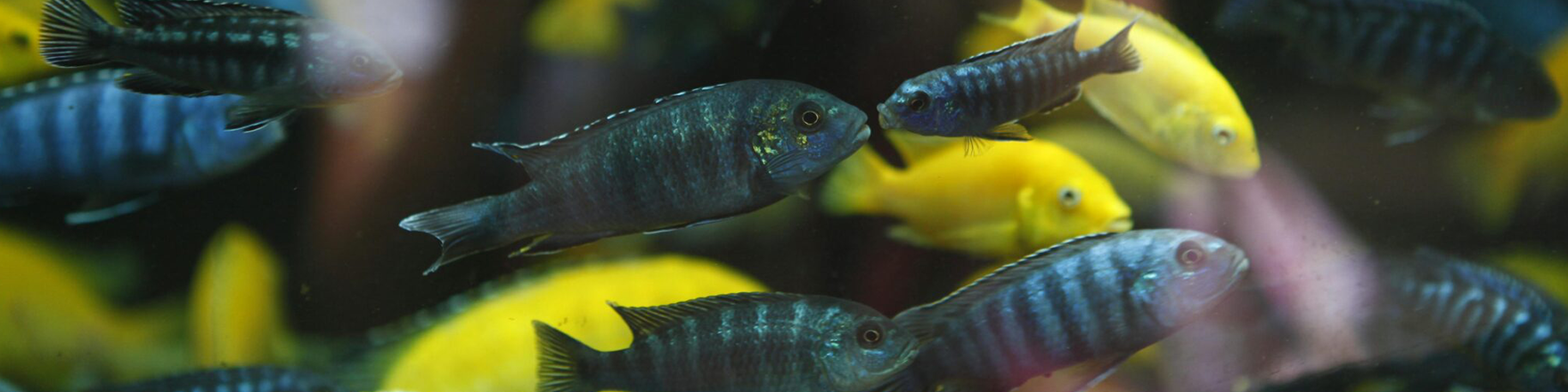
Lake Malawi is the third-largest lake in Africa, part of the Great Rift Valley system, and home to many species of colorful African cichlid. Hundreds of endemic fish species thrive here – especially the famous mbuna cichlids, known for their territorial behavior and vivid hues. Neighboring lakes like Lake Tanganyika and Lake Victoria also host unique ecosystems, but the malawi fish community remains unmatched in diversity.
These lake Malawi cichlids are admired not only for their bright colors but also for their fascinating behaviors – they spawn, guard fry, and practice mouth brooding, carrying baby fish in their mouths until they are strong enough to swim freely. Watching a female with her newly hatched brood is one of the most captivating scenes in all freshwater aquariums.
A Lake Malawi aquarium is ideal for aquarists who wish to capture this slice of African nature authentically – with respect for its biology, structure, and dietary needs.
Which tank size to choose? #
In the Malawi world, one rule stands firm: larger tanks equal healthier fish and more natural behavior. A tank must hold at least 200 liters (around a 55-gallon tank), but if you want to see true dynamics and territorial rituals, go for 300 liters or more.
These freshwater fish are highly territorial. Each male defends his area with impressive passion, so you must provide enough hiding places for the fish – caves, crevices, and rock shelters. When there’s not enough space or cover, aggression escalates quickly. That’s why a carefully planned aquascape with multiple hiding places helps maintain balance.
Water parameters: hardness, pH #
Water in Lake Malawi is hard, alkaline, and exceptionally clear. General hardness (GH) and pH are two pillars you must keep under control if you want to provide appropriate conditions.
Ideal parameters are:
- pH: 7.8 – 8.6
- General Hardness (GH): 10 – 15 °dH
- Carbonate Hardness (KH): 8 – 12 °
- Temperature: 24 – 28 °C
Cichlids do best in hard, mineral-rich water, so adding crushed coral or Philippine limestone helps stabilize both hardness and pH. A reliable heater is essential for keeping the water temperature steady, while a check valve prevents backflow and protects your air pump system.
Always use a water conditioner to neutralize chlorine and heavy metals, ensuring the best survival rate for your fish. Consistent water quality is key to health and longevity.

Aquarium decor: rocks, sand, layout #
Substrate #
A Malawi biotope calls for sand or a sand–fine gravel mix. You can use aragonite or coral sand, which lightly raise pH and buffer the water. Natural sand (0.5–1.5 mm) simulates the lake floor well. Avoid sharp grains that might injure the fish.
Rocks and caves #
This is your foundation. Use Philippine limestone, tufa, serpentinite, or safe garden rocks (mind the chemical composition!). Build pyramidal or U-shaped structures, plenty of cracks, passages, caves – every male needs his corner. Stack rocks stably, securing them (e.g. with aquarium resin or mesh), so they won’t collapse. It’s wise to build the rockwork first, then overlay sand around it. Natural sand (0.5–1.5 mm) looks authentic and allows fish to burrow safely.
If aggression spikes after adding new fish, slightly rearrange the rockwork to break existing territories and reduce tension.
Aquarium plants #
In a Malawi biotope, rocks and sand dominate, so the aquarium is sparse in vegetation. But if you want to soften the austerity, choose hardy, strong-rooted plants like anubias. They are resilient, slow-growing, and don’t interfere much with fish. You can attach them to rocks or roots.
Avoid species that fish might uproot or damage – cichlids are often herbivorous or omnivorous, so greenery might become their … lunch.
Decorative details #
Add pebbles – small, rounded stones to soften the composition. You can also include snail shells (e.g. Neothauma) – they occur naturally. But remember: the overall look should remain as raw as possible.
Lighting and aquarium illumination #
Lighting in a Malawi aquarium matters less for plants and more for aesthetics. However, ensure a suitable color temperature – cool, bluish light (around 10,000 K) beautifully accentuates the blues and yellows of cichlids, creating a natural underwater mood.
Don’t overdo the intensity – too strong light encourages algae growth, which, though part of the ecosystem, can overwhelm the layout. In moderate light, rocks gain depth, and fish feel safer.
Fish selection – mbuna, non-mbuna, and mixes #
In the Malawi world, you must understand: there are mbuna (rock dwellers) and non-mbuna (e.g. peacocks, haps). Mbuna are territorial, live in crevices, and compete ferociously – non-mbuna may be less aggressive, but can also become predatory.
- Mbuna – the classic pick for rock biotopes. Genera like Pseudotropheus, Melanochromis, Cynotilapia, Labidochromis. They are small (4–6 inches), yet can be aggressive. Hence, choose either a single-species grouping or a well-planned community.
- Non-Mbuna – e.g. Aulonocara (peacocks), haps, larger species. If you combine them, you’ll need an extremely large aquarium and plenty of swimming space.
Example setup
In a 300–400 L tank, you might try several males of different mbuna plus a few females. If you add one peacock, watch if the fish get along. Be cautious with aggressive species: Melanochromis auratus or Nimbochromis have been difficult in many setups.
Avoid mixing Malawi with other lake types (e.g. Amazon) – diet, parameters, temperament differ entirely.

Filtration and support systems #
As emphasized earlier, the biological filter is indispensable. A top-tier filter with a large biological media load and strong mechanical filtration is fundamental. Some hobbyists use a sump system with compartments: sponge for mechanical filtration, bio media, spray bars, bioballs.
You also need strong aeration (bubbles, surface movement) and weekly water changes of 10%, or more often with high stocking. Ideally, use an automatic water change system.
Biological parameters & risks – maintaining balance #
Algae will appear – especially on rocks. That’s natural – many mbuna scrape them. But an excess of algae indicates imbalance (too much light or nutrients).
You must care for stability: any pH swings, nitrate spikes, abrupt changes in temperature or water quality can provoke stress and disease. In a cichlid tank, stable water parameters are the foundation of success.
Keep an eye on aggression – dominant individuals may harm others. Sometimes the best solutions are extra feeding, higher population density (to spread aggression), or adding “distraction” fish to redirect attention.
Equally important is the nitrogen cycle: ammonia and nitrites must be nearly zero before introducing fish.
Common challenges & how to avoid them #
- Too small filter / insufficient filtration: waste buildup leads to algae, disease
- Overcrowding with insufficient filtration could lead to chaos and conflict
- Using rocks with unfavorable chemistry: might leach metals or acidify water
- Sudden parameter changes – e.g. unbuffered tap water, wrong additives
- Excessive lighting + lack of plant planning could accelerates algae
- Mixing species of drastically different temperaments without experience
Conclusion – is a Malawi biotope the right choice? #
A Malawi biotope is for those who want something demanding yet rewarding. It allows you to observe territorial relations, vibrant colors, and behaviors in an environment close to natural.
It’s a cichlid aquarium that emphasizes biological balance, raw rocky character, and minimalistic planting. It brings the aquarist into a realm where filtration, stable water parameters, and thoughtful layout determine success.
If you’re a beginner, I advise gaining experience with simpler aquarium types first, and approaching Malawi with humility and care. But if you’re seeking a challenge – a Malawi biotope can become your passion for years.