
Introduction #
Spring pond start-up often seems simple: you turn on the filter, check the pump, water starts circulating, and everything appears to be working as it should. Yet after a few days, the water may become cloudy, algae can begin to grow faster, and the entire pond may lose its stability. At this point, it is easy to assume that the filter is not working properly or is not powerful enough. In reality, however, the problem rarely lies with the equipment itself. After winter, the biggest challenge is the pond’s biology, which is only beginning to recover. Even a technically efficient filter is not yet ready to perform its full function. Effective pond filtration is not based solely on water flowing through a device. It depends on the cooperation of several elements: beneficial bacteria, water parameters, the amount of organic matter, and overall environmental conditions. If just one of these factors is out of balance, the entire system can quickly become unstable.
What happens to filtration after winter? #
In winter, a garden pond operates in a state of reduced activity. Fish metabolism slows down to a minimum, nitrifying bacteria work very slowly, and the decomposition of organic matter is significantly reduced. At the same time, organic waste gradually accumulates in the pond, including leaves, dead plant matter, and fish waste. As temperatures rise, the situation changes quickly. Organic matter begins to decompose faster, ammonia is released into the water, and beneficial bacteria are only starting to rebuild their population. This creates a temporary imbalance, where the amount of waste increases faster than the system’s ability to process it. This is when the filter may seem ineffective — not because it is damaged, but because the right biological conditions for proper filtration have not yet been restored.

The most common mistakes when starting a pond filter in spring #
1. Starting full filtration too quickly
One of the most common mistakes is running the filter at full power from the very first day. Although this may seem logical, it can actually overload the system. Water begins to circulate intensively, while the bacteria responsible for breaking down nitrogen compounds are not yet able to keep up. As a result, ammonia and nitrites may accumulate, which can negatively affect fish health and the overall stability of the pond. A better solution is to restart filtration gradually and support it with nitrifying bacteria, such as Aquaforest Bio Starter. This helps speed up the recovery of the nitrogen cycle and stabilizes the aquatic environment.
2. Cleaning the filter too thoroughly
After winter, many pond owners decide to clean the filter thoroughly, often using tap water or replacing all filter media at once. From a biological point of view, however, this can remove the beneficial bacteria that may have survived the winter and could serve as a base for rebuilding the system. As a result, the filter has to start working from scratch, and the time needed for it to become biologically stable is significantly extended.
In practice, it is better to:
- rinse filter media in pond water
- avoid replacing all filter media at once
- replenish beneficial bacteria after cleaning
3. Ignoring bottom sludge buildup
A filter does not work independently from the rest of the pond. If the bottom contains a large amount of organic matter, the filter is not simply stabilizing the system — it is constantly trying to keep up with the incoming waste.
As temperatures rise, bottom sludge begins to decompose, releasing ammonia and consuming oxygen. This places additional pressure on filtration and encourages the formation of anaerobic zones. That is why it is important not only to restart the filter, but also to reduce the source of the problem by:
- partially removing bottom sludge
- supporting their biological breakdown with Aquaforest Bio Vacuum
- improving water circulation
This approach helps relieve pressure on the entire system and restore balance more quickly.
4. Lack of support from chemical and adsorptive filtration
In spring, the water often contains substances that biological filtration cannot remove quickly enough. These may include heavy metals, toxins, or excess ammonia. Under such conditions, the biological filter becomes overloaded, which slows down its stabilization. Adding adsorptive media to the system helps improve water quality more quickly:
- Aquaforest Zeolith removes ammonia and supports biological filtration
- Aquaforest Carbon removes toxins and improves water clarity
As a result, the entire system works more efficiently and remains more stable.
5. Ignoring water parameters
Biological filtration works most effectively under specific chemical conditions. One of the key parameters is pH, which directly affects ammonia toxicity and bacterial activity. High pH can increase the risk of fish poisoning while also reducing filtration efficiency. That is why regular water testing and gradual parameter adjustment are important parts of stabilizing a pond. If the pH is too high, it can be corrected with Aquaforest pH Minus, which helps safely lower its level.
6. Returning to intensive feeding too quickly
As the weather improves, fish become more active, which often leads pond owners to increase feeding too quickly. The problem is that the filter and the pond’s biology are not yet ready for this extra load. Excess food means more waste, which directly affects water quality and can make the pond less stable.
That is why it is worth:
- increasing the amount of food gradually
- adjusting feeding to the water temperature
- observing fish behavior and water condition
The importance of oxygen and water flow #
Filtration efficiency depends not only on the presence of bacteria, but also on the conditions in which they function. Nitrifying bacteria need oxygen, so a lack of it can significantly reduce the effectiveness of the entire system. After winter, ponds often have areas with poor circulation, especially near the bottom. In these places, oxygen levels can drop easily, encouraging decay processes instead of proper biological filtration. Even water flow through the filter and good oxygenation throughout the pond create the right conditions for bacteria to develop and effectively process waste.
How to tell if the filter is starting to work properly? #
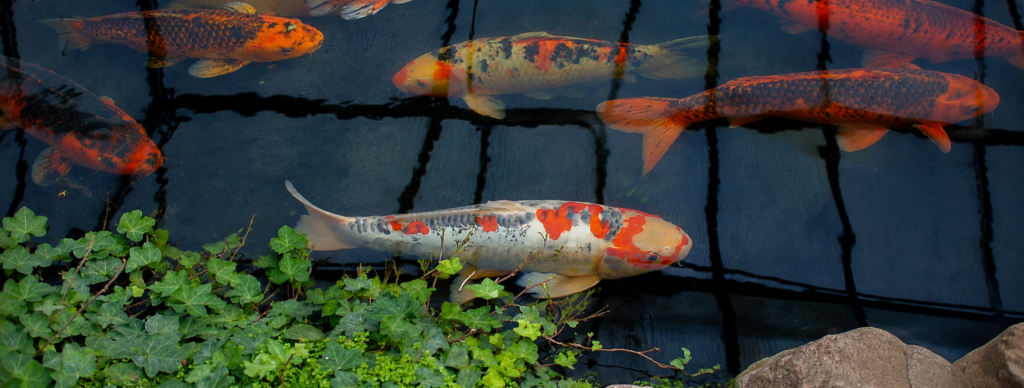
The return to balance does not happen immediately, but the effects are clear and easy to notice. The water gradually becomes clearer, fish become more active, and algae growth is no longer so rapid.
These are signs that the nitrogen cycle is becoming stable and biological filtration is starting to perform its role properly.
Summary #
Filtration problems after winter are rarely caused by equipment failure. Most often, they result from a disturbed biological balance that needs time and the right conditions to rebuild.
Effective filtration is not just about the filter itself, but the entire system, in which the key roles are played by:
- nitrifying bacteria
- control of organic matter
- stable water parameters
When these elements start working together, the pond gradually returns to balance. The filter stops being a source of concern and begins to fulfil its proper role — supporting the natural processes that keep the water in good condition throughout the season.