

Removing sludge and debris from the substrate in a freshwater aquarium – how clean gravel or sand in the fish tank with a substrate cleaner? #
Every freshwater aquarium is a living ecosystem in which biological processes are constantly taking place. Fish are fed, aquatic plants grow and die back, and beneficial bacteria are responsible for breaking down organic compounds and ensuring the proper functioning of the nitrogen cycle. A natural consequence of these processes is the gradual accumulation of sludge and organic deposits on the bottom. Water quality depends, among other things, on whether the amount of these contaminants remains under control.
Where does sludge in the aquarium substrate come from? #
Food residues, fish waste, fragments of leaves and fine particles of matter that were previously suspended in the water settle between the grains of the substrate. Uneaten food that remains out of reach of the fish can also end up there. The presence of some sediment does not in itself indicate a problem – it is part of the natural functioning of every mature tank. Only excessive accumulation of contaminants can negatively affect water quality, reduce biological efficiency and make it more difficult to maintain stable parameters. In practice, it is therefore important to control the amount of contaminantsaccumulating on the surface and between the grains of the substrate.
Where do sludge, detritus and debris build up most often in gravel and sand? #
This is most common in aquariums with a high fish stocking density, intensive feeding or areas with weaker water flow near the bottom. Dense aquascaping, roots, stones or extensive vegetation can cause some contaminants to remain in hard-to-reach areas. Sheltered parts of the bottom of the tank, where water movement is weaker, are particularly prone to this accumulation. Over time, more and more organic matter begins to build up there, and its natural decomposition becomes less efficient.
This is precisely why keeping the bottom clean is not about striving for sterility. The goal is to maintain biological balance in the aquarium so that beneficial microorganisms can effectively process organic compounds and support a healthy environment for fish and plants. A clean substrate should therefore primarily mean the absence of excessive amounts of accumulated contaminants, not the complete sterilization of the bottom.
Does sludge buildup in aquarium substrate harm fish and water quality? #
This is one of the most frequently asked questions among beginner aquarists. The answer is not straightforward. A small amount of sediment is completely natural and forms part of the aquarium’s biology. The problem arises when bottom deposits begin to accumulate faster than beneficial bacteria and other microorganisms can break them down. For every aquarist, what matters should therefore not be the mere presence of sediment, but the rate at which it accumulates. During the decomposition of organic matter, ammonia is produced, which in a properly functioning aquarium is converted by nitrifying bacteria into nitrites and then into nitrates. A properly functioning nitrogen cycle is what helps ensure the safety of the tank’s inhabitants. However, if the amount of contamination becomes too high, the biological balance can be disrupted. Regular monitoring of water parameters makes it easier to assess whether the processes taking place in the tank remain stable.
How does excess sludge affect algae and water quality? #
Excess deposits cause nitrate and phosphate levels to rise, which promotes algae growth and reduces water clarity. In practice, both an excessive phosphate level and an increase in available nutrients can encourage algae growth. In areas where water flow is limited, local zones with lower oxygen levels may develop. Under such conditions, decomposition processes are more likely to occur, often accompanied by unpleasant odours and a deterioration in the quality of the environment for fish. However, this does not mean that every layer of sludge requires immediate and thorough substrate vacuuming. Much better results come from systematic maintenance and supporting the natural biological processes taking place in the substrate.

Why can overly thorough aquarium cleaning disrupt the biological balance? #
Paradoxically, an excessive desire to keep the bottom perfectly clean can have the opposite effect. Millions of microorganisms responsible for maintaining the natural biological balance live in the substrate and filter media. They support the breakdown of contaminants and help stabilise water parameters. They are also an important part of properly functioning biological filtration.
A single, very thorough vacuuming of the entire bottom combined with intensive filter cleaning can significantly reduce the population of these organisms. As a result, biological filtration needs time to recover, and fluctuations in parameters are more likely to occur in the aquarium. For this reason, intensive mechanical cleaning should not be treated as the only method of aquarium maintenance.
How to safely vacuum the substrate in an aquarium? #
Experienced aquarists therefore recommend carrying out maintenance in stages. Regular water changes, sensible vacuuming of the most contaminated areas and monitoring of parameters are far more beneficial than occasional, very intensive cleaning. This gradual removal of deposits helps limit interference with the biological processes taking place in the tank. There is also no need to thoroughly clean the entire tank during every maintenance session. It is better to focus on areas where contaminants actually accumulate most intensively.
How does a biological substrate cleaner support the aquarium substrate? #
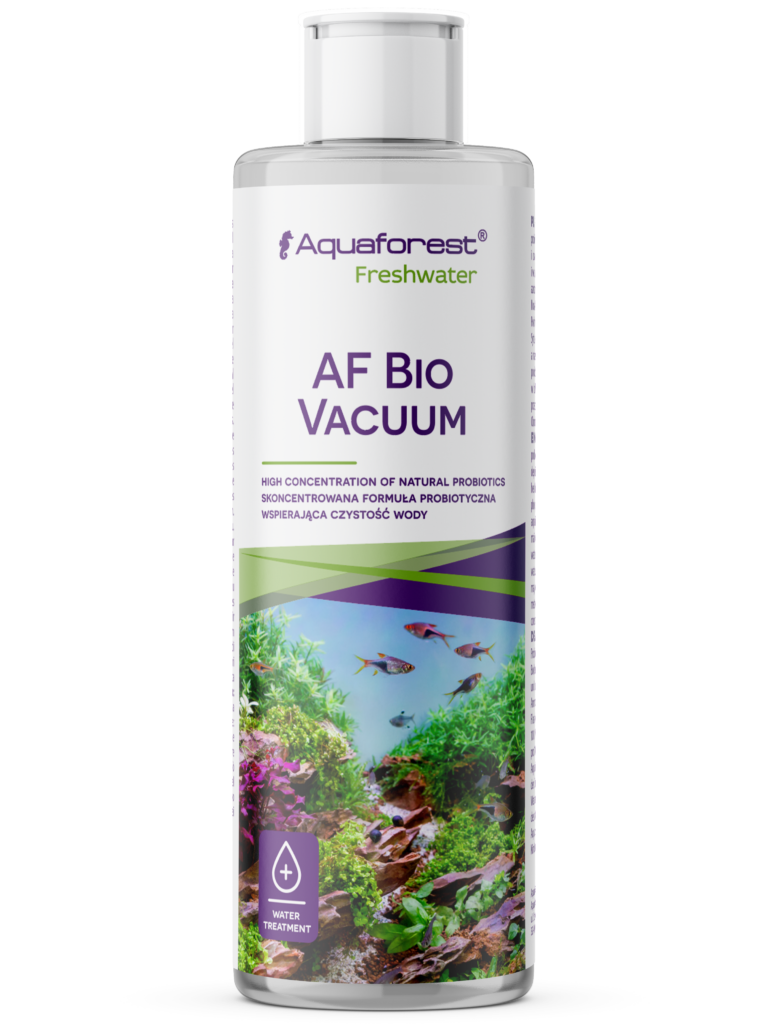
More and more people are also choosing to use products that support the natural processes taking place in the substrate. A liquid biological substrate cleaner, such as Aquaforest Bio Vacuum, does not replace substrate vacuuming or mechanical filtration. Instead, it supports the breakdown of accumulated organic matter, helping to maintain biological balance in the aquarium and reduce the amount of accumulated deposits. Such a biological preparation complements standard maintenance rather than replacing it.
In the next part of the article, we will explain how Aquaforest Bio Vacuum works, why it is described as a biological substrate cleaner for aquariums, when it is worth using and how to use it to support water quality, clarity, the work of beneficial bacteria and the long-term stability of your aquarium. Its regular use is worth combining with the other elements of proper tank maintenance.
.
How does Aquaforest Bio Vacuum work? #
Keeping the aquarium bottom clean is not only about removing visible contaminants. Supporting biological processes is essential, as they allow organic matter to be systematically broken down and make it easier to maintain a natural biological balance in the aquarium. Aquaforest Bio Vacuum from the Freshwater line was developed with precisely this type of action in mind. Its action focuses on supporting the natural breakdown of contaminants present in the substrate.
How do microorganisms support biological cleaning of the substrate? #
Aquaforest Bio Vacuum is an innovative liquid biological preparation, also described as a liquid biological substrate cleaner or a liquid substrate cleaner for aquariums. It contains a carefully selected composition of live probiotic microorganisms that support the biological cleaning of the substrate. The microorganisms participate in the breakdown of organic matter, thereby reducing the amount of accumulated deposits and supporting their natural mineralisation. This is an important difference compared with mechanical substrate vacuuming. Instead of removing only visible sludge, Aquaforest Bio Vacuum supports the processes taking place within the substrate. As a result, the preparation helps reduce accumulated food residues, fish waste and dead fragments of aquatic plants, which could otherwise worsen water quality over time. In this way, the biological action of the preparation complements the physical removal of deposits during regular maintenance.
When used regularly, Aquaforest Bio Vacuum supports the maintenance of biological balance in the aquarium, improves conditions for beneficial bacteria and helps create a stable environment for fish and plants.
Does a biological substrate cleaner replace substrate vacuuming and mechanical aquarium cleaning? #
This is another question that often arises among people involved in fishkeeping. The answer is no. Even the best biological substrate cleaner for an aquarium cannot replace regular tank maintenance. Aquaforest Bio Vacuum supports the breakdown of organic contaminants, but it is still worth periodically removing excess deposits from areas where they accumulate most quickly. This applies especially to spaces beneath roots, between stones or among dense clumps of plants, where water flow is limited.
How to combine a substrate cleaner, filtration and aquarium water changes? #
The best results come from combining several measures:
- regular use of Aquaforest Bio Vacuum,
- sensible vacuuming of the most contaminated areas of the tank bottom,
- efficient biological and mechanical filtration,
- systematic water changes,
- monitoring parameters such as pH, ammonia, nitrates and phosphates.
This approach helps support the nitrogen cycle, reduce the amount of sludge and organic deposits, and improve water clarity without disrupting the aquarium’s biology.

Why is regular observation of a freshwater aquarium so important? #
Every freshwater aquarium functions slightly differently. The number of fish, feeding intensity, type of substrate and filter efficiency all affect the rate at which deposits accumulate. Therefore, even when using Aquaforest Bio Vacuum, it is worth regularly observing your tank.
How to recognise excess sludge in an aquarium? #
Particular attention should be paid to the appearance of the bottom, fish behaviour and water clarity. Persistent cloudiness, rapid sludge accumulation, reduced clarity or unpleasant odours may indicate excessive accumulation of organic matter or a disruption of the biological balance. Regular monitoring of parameters is also helpful. Monitoring ammonia, nitrate and phosphate levels, as well as pH, makes it possible to quickly notice changes taking place in the aquarium and respond early enough. This makes it easier to maintain a stable tank in which both fish and aquatic plants can thrive under optimal conditions.
Biological support for a healthy aquarium #
A healthy aquarium is the result of many elements working together. An efficient filter, responsible feeding, regular water changes, parameter monitoring and proper bottom maintenance collectively help establish a natural biological balance. This balance determines whether beneficial bacteria can effectively support the nitrogen cycle, reduce the amount of contaminants and maintain high water quality. Aquaforest Bio Vacuum, as a liquid biological substrate cleaner for aquariums, supports the breakdown of organic matter, reduces the accumulation of sludge and organic deposits, and helps maintain biological balance in the aquarium. Regular use of the preparation can help improve water quality and clarity and create a more stable environment for fish and plants.
Why is a substrate cleaner alone not enough for aquarium maintenance? #
It is worth remembering, however, that Aquaforest Bio Vacuum is one element of comprehensive maintenance, not its only foundation. Only by combining the action of a biological preparation with proper filtration, sensible feeding and systematic observation of the aquarium can you enjoy a clean bottom, stable parameters and a well-functioning ecosystem over the long term. This makes AF Bio Vacuum a valuable form of support for every aquarist who wants to care for the biology of their aquarium in a natural and responsible way.