
Why Spring Plant Care in a Pond Is So Important #
Spring in a pond begins much earlier than the calendar might suggest. When aquatic plants start growing again depends mainly on water temperature, the amount of direct sunlight, oxygen levels, and overall water quality. As soon as conditions improve, intensive biological processes begin in the pond ecosystem: organic matter and dead plant material start to break down, some sedimentation settles on the bottom, and nitrogen and phosphorus compounds are released into the pond water. This excessive aquatic plant material and amount of nutrients can quickly reduce water clarity, disturb oxygen levels, and create ideal conditions for algae growth.
This is the moment when the balance of the pond ecosystem can easily be disturbed. Pond plants have to compete with algae for nutrients from the water, which is why spring care is not just about cleaning. Its purpose is to consciously activate processes that help keep the pond in good condition, improve water quality, and allow aquatic plants to take natural control of the ecosystem. As a result, they act as natural filters, support filtration, and help absorb nutrients from the water, while healthy aquatic plant growth limits algae growth right at the start of the season.

What Happens to Plants in a Pond After Winter #
After a period of low temperatures, most aquatic plants remain dormant. Their root systems are weakened, some leaves have died back, and their metabolism is only just beginning to speed up. Winter in a pond often leaves behind mat, organic debris, and sediment on the bottom of the pond, which gradually release nutrients from the water back into the system. If they are not removed, they can worsen water quality, lower oxygen levels, and create conditions in which algae quickly appear.
Phosphorus, Nitrogen, and Water Quality After Winter #
At the same time, the water contains:
- products of organic matter decomposition
- elevated levels of ammonia and nitrites
- phosphates that promote algae growth
The problem is that pond plants are not yet ready to use these nutrients effectively. From a biological point of view, this means one thing: if we do not help the plants get started, algae will gain the advantage. Excess nutrient levels in the water, especially phosphorus and nitrogen compounds, can quickly worsen water parameters, reduce water clarity, and disrupt the biological balance of the pond ecosystem. That is why spring actions should take place on two levels at the same time: rebuilding plant condition and stabilizing water quality.
Removing Dead Plant Parts – The First Step in Restoring a Pond #
Pruning is a basic but often underestimated stage of spring care. Removing dead plant parts and damaged leaves is important not only for appearance, but also for biology. Dead leaves and stems sink to the bottom of the pond, increase the amount of sludge and plant material, and become a source of nutrients from the water that support algae. Regular plant clean-up helps improve water quality, reduce the risk of low oxygen levels, and keep the pond ecosystem in better condition at the beginning of the season.
How to Remove Organic Debris to Limit Algae Development #
Dead plant tissue left in the water:
- decompose and increase the biological load
- release nitrogen and phosphorus compounds
- worsen oxygen conditions in the bottom zone
That is why it is worth taking decisive action:
- remove last year’s leaves and stems
- trim marsh plants back to healthy sections
- clean the water surface of organic debris
- remove excess sludge before it supports algae growth
These actions help maintain clean pond water, improve oxygen access near the bottom, and limit the conditions in which string algae and filamentous algae develop. Regular removal of organic debris supports algae control at the start of the season and helps in preventing algae before the problem begins to intensify.
Repotting and Dividing Pond Plants – More Than Just Cosmetic Work #
Many aquatic plants, such as water lilies, cattail, and sweet flag, grow vigorously and over time begin to compete with themselves. Clumps that are too dense limit proper plant growth, reduce water flow, and can weaken their ability to absorb nutrients from the water. When plants become overcrowded, they also leave more unused nutrients available for algae growth.igorously and over time begin to compete with themselves.
Overgrown clumps:
- have limited access to nutrients
- root less effectively
- absorb light less effectively
Water Lilies, Marginal Plants, and Submerged Plants – When to Divide Them #
Spring is the best time to:
- dividing clumps
- replacing substrate in baskets
- repositioning plants in the pond
Well-positioned plants recover faster and absorb nutrients from the water more effectively, which directly helps reduce algae growth.
Fertilizing Water-Cleaning Plants – Precise, Not Random #
This is one of the most common mistakes in spring care: either a complete lack of fertilizer or the use of products that additionally increase nitrogen and phosphorus levels. Aquatic plants do need nutrients, but in spring the key is smart nutrient management, not adding more nutrients for algae. Excess nitrogen and phosphorus can quickly worsen water quality, disturb water pH, and create conditions in which string algae, filamentous algae, or green water appear. It can also increase the growth of algae when plants are not yet strong enough to absorb what is available.
They are responsible for:
- intensive growth
- leaf coloration
- stress resistance
How to Care for Water-Cleaning Plants Without the Risk of Blooms #
Fertilization should therefore be targeted. Aquaforest Pond Booster supplies micro- and macroelements without nitrogen and phosphorus, which means it supports water-cleaning plants without increasing the risk of algae blooms. This is especially important when the water condition after winter is unstable and the pond ecosystem is only just rebuilding its biological life.
Regular, moderate fertilization accelerates plant start-up, improves their condition, and increases their ability to compete with algae. As a result, plants in the pond clean the water more effectively, support biological balance, and help control algae naturally. For pond owners, this is one of the safer control options because it does not work like a herbicide, algaecide, or harsh chemical water treatment, but supports the natural role of vegetation instead.

How Deep to Plant Pond Plants and Why It Matters #
This is a detail that is often overlooked, yet it has a direct impact on plant growth rate and condition, because every type of aquatic plant has its own optimal depth range. If you want to prepare your pond well for the season, it is worth checking not only the condition of the water, but also whether the plants in the pond are placed in the right zones. Incorrect placement can weaken their growth, limit their uptake of nutrients from the water, and make it easier for algae to develop in the pond.
Floating, Submerged, and Marginal Plants – Suitable Planting Zones #
In practice:
- marsh plants, such as iris and sweet flag, grow best at a depth of 0–20 cm
- plants with floating leaves, such as water lilies and some other lilies, usually need 40–100 cm
- oxygenating plants should be fully submerged, but in a well-lit zone
- floating plants, such as water hyacinth and water lettuce, float on the surface of the water and help shade it
- submerged plants are often better suited to deeper areas, as long as enough light reaches them
Planting too deep limits access to light and slows photosynthesis. Planting too shallow destabilizes the plant and exposes it to fluctuations in water temperature. If plants are not growing despite fertilization, very often the problem is not a lack of nutrients, but incorrect positioning in the pond. In that case, it is worth replanting the plants, choosing the right depth for them, and leaving space for new plants that will support the pond’s biological balance.
Biological Balance and Water Quality in a Pond Are the Foundation of the Entire System #
Plants do not function in isolation — their condition depends directly on water quality and the stability of biological processes. The most important mechanism is the nitrogen cycle. It is responsible for converting toxic ammonia into less harmful forms of nitrogen. After winter, this process is usually disrupted, which is why a pond in spring requires support not only for plants, but also for filtration, bacteria, and control of water parameters in the pond.
How to Clean a Pond and Support Stable Biology #
Key actions include:
- supporting nitrifying bacteria with Aquaforest Bio Starter, which accelerate water stabilization
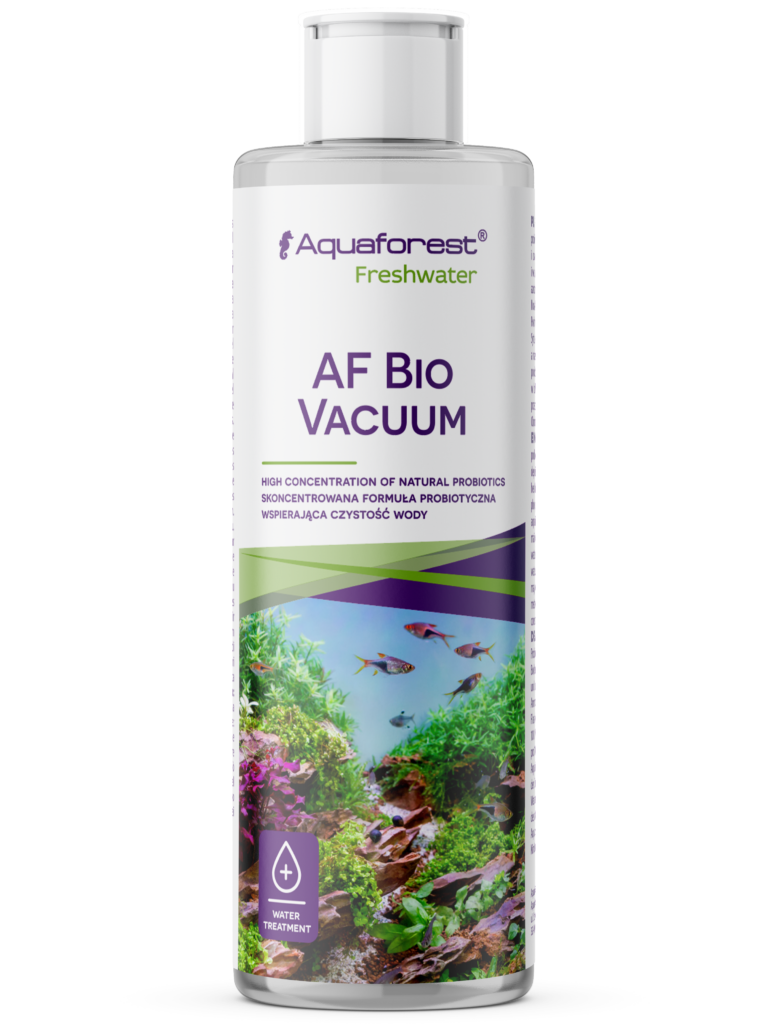
- reducing bottom sedimentation with Aquaforest Bio Vacuum, which limits sources of pollution that may move back into the pond,
- controlling ammonia and heavy metals with filter media Aquaforest Zeolith
- improving aeration with an aerator or fountain when oxygen conditions are weak
Without stable biology, even the best-cared-for plants will not be able to function effectively. Only the combination of proper planting, clean pond water, good filtration, and active beneficial bacteria makes it possible to maintain a healthy aquatic ecosystem, reduce cloudy or green water, and lower the risk of algae appearing right at the start of the season. This also supports the wider food chain and helps create safer conditions for all organisms living in the pond.
How Plants in a Pond Compete With Algae #
This is one of the most important mechanisms in a pond. Plants and algae use the same resources: light, nitrogen, and phosphorus. If plants grow intensively, they absorb nutrients from the water more quickly and reduce their availability to algae. If plants are weakened, the situation is reversed — excess nutrients begin to support algae formation, reduce water clarity, and can lead to problems with string algae.
How to Fight Algae in a Pond by Strengthening Plants #
An effective strategy is not based only on removing algae, but on:
- strengthening plants (Aquaforest Pond Booster)
- reducing phosphates (Aquaforest Phosphate Minus)
- maintaining stable water parameters
Light and Temperature – Two Factors Affecting Plant Growth and Algae in a Pond #
In spring, it is easy to fall into the trap of thinking: “I’m doing everything right, but the plants still aren’t growing.” The problem is that biology has its own pace, and it cannot be accelerated beyond a certain point.
When Plants Begin to Absorb Nutrients From Pond Water #
The key relationships are simple:
- most aquatic plants only begin intensive growth above 10–12°C
- nitrifying bacteria work stably only from around 12–15°C
- with low sunlight, plants absorb significantly fewer nutrients
This means that in early spring, you may have ideal chemical conditions, but the plants may still grow only at half speed. Instead of trying to force faster growth, for example by increasing fertilization, it is better to:
- support biology with pond bacteria (Aquaforest Bio Starter)
- remove excess nutrient compounds
- wait patiently until the temperature stabilizes at a seasonal level

The Most Common Mistakes in Spring Pond Care #
At the start of the season, several common patterns often lead to problems:
- introducing too many fish too quickly
- failure to remove sludge after winter
- fertilizing by guesswork, without monitoring parameters
- ignoring the role of bacteria and biological filtration
What Most Often Causes Cloudy Water, Blooms, and Poor Plant Condition #
The result of such mistakes is predictable: green and cloudy water, algae blooms, and poor plant condition. When disturbed biological balance persists for longer, algae appear faster, and the water becomes alkaline or has unstable parameters. In spring, the most important thing is not only to care for plants, but also to understand the condition of the water, limit phosphorus, support biological life, and react before resistant algae begin to dominate in the pond or water garden. This makes it easier to fight algae effectively, maintain clean water, and enjoy a beautiful pond throughout the season.
The Key to Healthy Plants, Clean Water, and Less Algae #
Spring plant care in a pond is a process that starts with simple actions: pruning, cleaning, and replanting. However, its effect depends on something more — understanding how the entire aquatic ecosystem works. Strong, well-nourished plants are not just decorative elements. They act as natural filters, stabilize the water, and naturally limit algae development.
It is worth paying attention to the pond at the very beginning of the season, before cloudy water, excess nutrients, and the first algae problems appear. Regular care, parameter control, and support for biological life help maintain biological balance and improve water quality without constant use of intervention products.
How to Maintain Biological Balance and Clean Water Naturally #
If you take care of three things — healthy plants, stable biology, and nutrient control — the pond will start working in your favor. Then clean water and balance will not be the result of constant interventions, but the natural state of a well-functioning pond.
A well-maintained pond does not require constant algae control. It requires systematic plant care, observation of water condition, and support for biological processes that allow water-cleaning plants to take natural control of the pond. As a result, it is easier to maintain clean water, reduce algae, and enjoy a healthy, stable pond throughout the season.