
Algae in a Pond – How to Remove Algae and Keep Your Pond Clean #
Algae in a pond are one of the most common problems faced by garden pond owners. They appear suddenly, multiply quickly, and effectively reduce water clarity. The natural reaction is to want to remove them, either mechanically or by using treatments.
In practice, however, algae are rarely the beginning of the problem; much more often, they are its consequence. They are a visible sign that something in the ecosystem has stopped working properly.
To effectively limit their growth, you need to understand the mechanism behind them.
Algae as a Natural Part of the Pond Ecosystem #
Algae are present in every pond, as well as in lakes and other bodies of water. They cannot be completely eliminated, and there is no need to do so. In small amounts, they play a beneficial role — they produce oxygen, take part in the nutrient cycle, and are part of the aquatic ecosystem.
How Can You Tell When the Amount of Algae Becomes a Problem? #
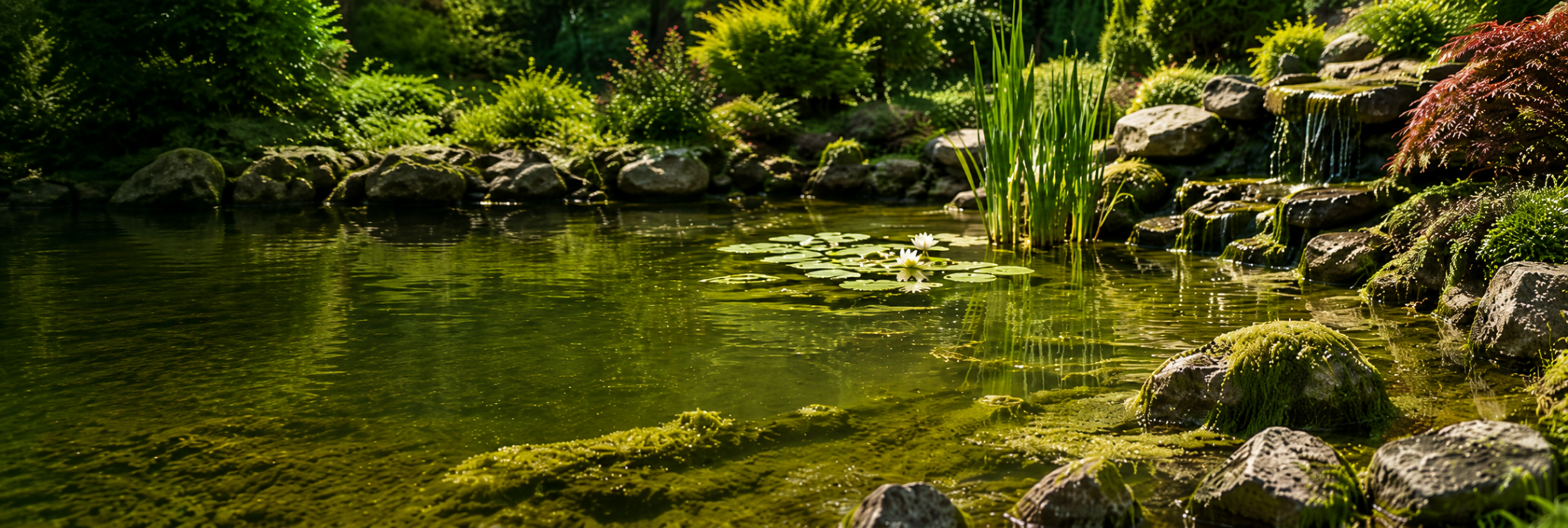
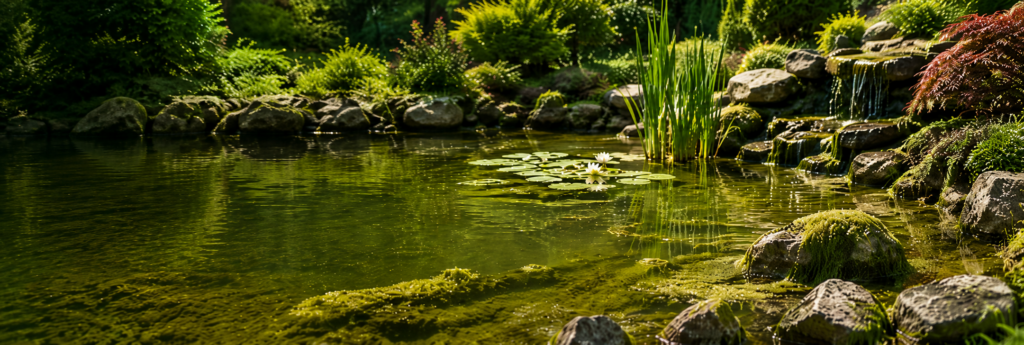
The problem begins when their growth gets out of control. The water turns green, or long, thread-like structures appear, which can settle on plants, decorative elements, along the edges, and on the bottom of the pond.
In such situations, algae are not the culprit, but rather an organism that has taken advantage of favorable conditions, such as too many nutrients, access to light, and a disrupted biological balance.
Where Do Algae in a Pond Come From? Key Causes #
Algae growth always has a specific cause. It most often results from excess nutrients and a disruption of the biological balance, where an imbalance in the water body creates ideal conditions for their development.
The most important factors are:
- excess nitrogen compounds (ammonia, nitrites, nitrates),
- high phosphate concentration,
- accumulated organic matter — sludge, plant debris, fish waste,
- insufficient biological filtration,
- too few aquatic plants, such as Canadian waterweed, which absorb some nutrients from the water.
Bacteria, pH, and Excess Phosphates as Fuel for Algae #
Organic matter is constantly produced in a pond. Its decomposition leads to the release of ammonia — a substance toxic to fish. In a properly functioning pond, nitrifying bacteria convert it into nitrates, which can be used by plants. However, if this process does not work efficiently, nitrogen compounds begin to accumulate, creating an ideal environment for algae. The same applies to phosphates. They are one of the main factors driving blooms. Their excess almost always leads to intensive algae growth.
How to Prevent Algae from Returning in a Pond? #
Many pond owners experience the same pattern: they remove the algae, the water looks good for a while, and then the problem returns. This is a classic vicious cycle. It happens because removing algae does not eliminate the cause of their growth. What is more, dead algae often remain in the water and begin to decompose, releasing more nutrients.
Why Removing Algae Alone Is Not Enough #
The effect is simple:
- more organic matter,
- more nitrogen and phosphorus compounds,
- even better conditions for more algae to grow.
Without breaking this cycle, the problem will keep recurring, regardless of the methods used. Remaining algae and dead biomass may float to the surface or settle on the bottom of the pond, where they continue to decompose.
Nitrogen Cycle, Bacteria, and Balance in a Pond #
A key process that regulates water quality is the nitrogen cycle. This biological mechanism determines whether a pond is stable or prone to problems. When the biological balance is disrupted, bacteria cannot keep up with processing waste, and the water becomes more susceptible to excessive algae and cyanobacteria growth.
How Do Bacteria Help Clean the Water and Limit Algae? #
W uproszczeniu wygląda to tak:
- organic matter decomposes into ammonia,
- bacteria convert ammonia into nitrites,
- other bacteria convert nitrites into nitrates.
If any stage does not work properly, toxic compounds begin to accumulate in the water. This is not only a threat to fish, but also a direct trigger for algae growth.

How to Break the Vicious Cycle and Remove Algae from a Pond? #
Effective action requires a change in approach: from reactive to systematic. Instead of focusing only on removing algae, you need to limit the conditions that allow them to grow.
How to Clean a Pond and Limit Sources of Pollution? #
The key is to reduce the amount of organic matter in the pond.
In practice, this means:
- regular removal of dead plant parts,
- controlling the amount of food given,
- reducing bottom sediment.
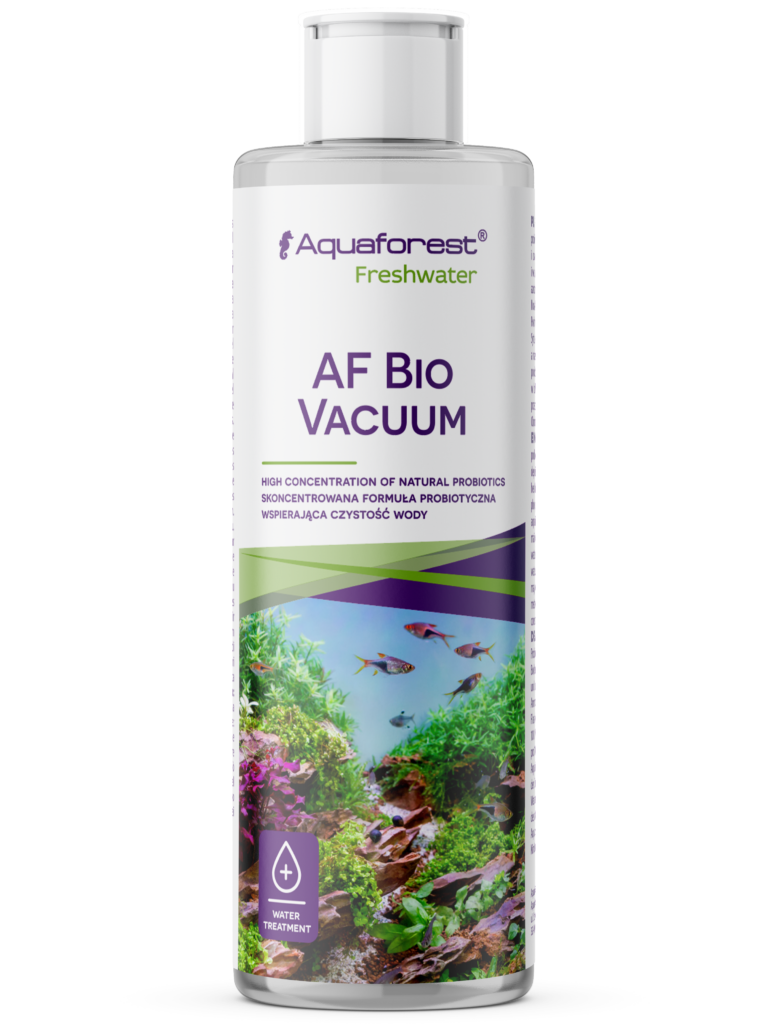
Biological treatments that support mineralization, such as Aquaforest Bio Vacuum, help turn the rotting process into stable decomposition, reducing the formation of toxic gases and excess nutrients.
Bacteria as Support for Pond Biology #
A strong population of nitrifying bacteria is the foundation of a stable pond.
Products such as Aquaforest Bio Starter:
- przyspieszają uruchomienie cyklu azotowego,
- reduce ammonia and nitrites,
- stabilize water parameters.
As a result, the amount of available nutrients that can be used by algae is reduced.
Phosphate Control in the Fight Against Algae #
Without reducing phosphates, it is difficult to achieve a lasting effect.
Adsorption products, such as Aquaforest Phosphate Minus:
- bind phosphates,
- reduce water cloudiness,
- reduce the risk of blooms.
It is one of the most important tools in the fight against recurring algae.
Filtration, Adsorption, and Cleaner Water in a Pond #
Pond water also contains substances that are invisible to the naked eye — toxins, heavy metals, and chemical residues.
Activated carbon (Aquaforest Carbon) and zeolite (Aquaforest Zeolith):
- remove chemical pollutants,
- bind ammonia,
- improve water clarity.
As a result, the environment becomes less favorable for algae and more stable for fish.
Aquatic Plants as Home Remedies for Reducing Algae #
Aquatic plants are natural competitors of algae. They absorb the same nutrients from the water, reducing their availability. Well-chosen plants, such as Canadian waterweed, make it harder for algae to develop because they compete with them for nutrients and limit light access in the pond.
In a well-balanced pond:
- plants grow intensively,
- algae have limited conditions for growth.
It is worth supporting their condition with mineral products that do not introduce additional nitrogen and phosphorus. This approach supports the balance of plants and animals and helps care for the pond in a more natural way.
Is It Worth Removing Algae Directly? #
Yes, but as part of a larger process.
Anti-algae products:
- limit algae growth,
- improve water oxygenation,
- support biological balance.
How Do Products Help Clean the Water After Algae Removal? #
At the same time, it is worth remembering that their effectiveness is highest when they work alongside controlling the root causes of the problem. In the case of cloudy water, clarifying products can also be helpful, as they bind fine particles and make them easier to remove through filtration.
A Stable Pond Instead of Constant Fighting #
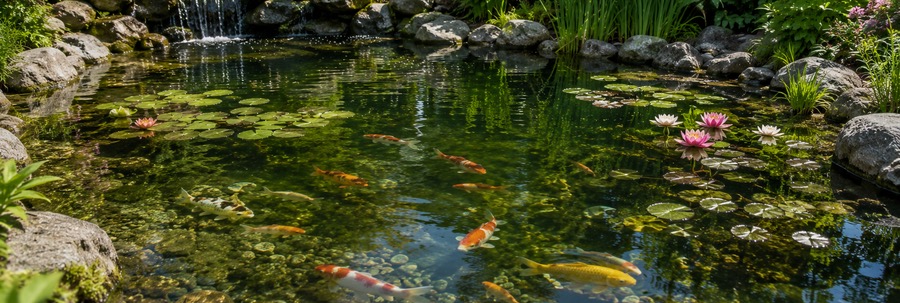
The most important change is the way you think about a pond. Problems such as algae, cloudiness, or a decline in fish condition rarely appear suddenly. They are the result of a gradual disruption of the biological balance within the entire aquatic ecosystem. That is why pond care should not only focus on reacting to symptoms, but also on regular pond cleaning and controlling the conditions in the water body.
How to Prevent Problems and Maintain Balance Throughout the Season? #
Effective care is not about dealing with individual problems, but about maintaining a stable environment throughout the season. Regular pond maintenance, observing fish and plants, and monitoring parameters such as water pH and water hardness help prevent algae from returning and keep the pond in good condition.
Green Water, String Algae, and Balance in a Pond #
Algae in a pond are not the cause, but the effect. They indicate that nutrients have accumulated in the pond and that biological balance is lacking. This condition often means a disrupted biological balance, too many nutrients, and conditions that support the growth of unwanted algae and cyanobacteria.
How to Reduce String Algae in a Pond? #
Breaking the vicious cycle requires action on several levels:
- limiting organic matter,
- supporting nitrifying bacteria,
- controlling phosphates,
- improving filtration,
- strengthening plants.
Only by combining these elements can you achieve a lasting effect: clean water, healthy fish, and a stable ecosystem that is able to regulate itself.