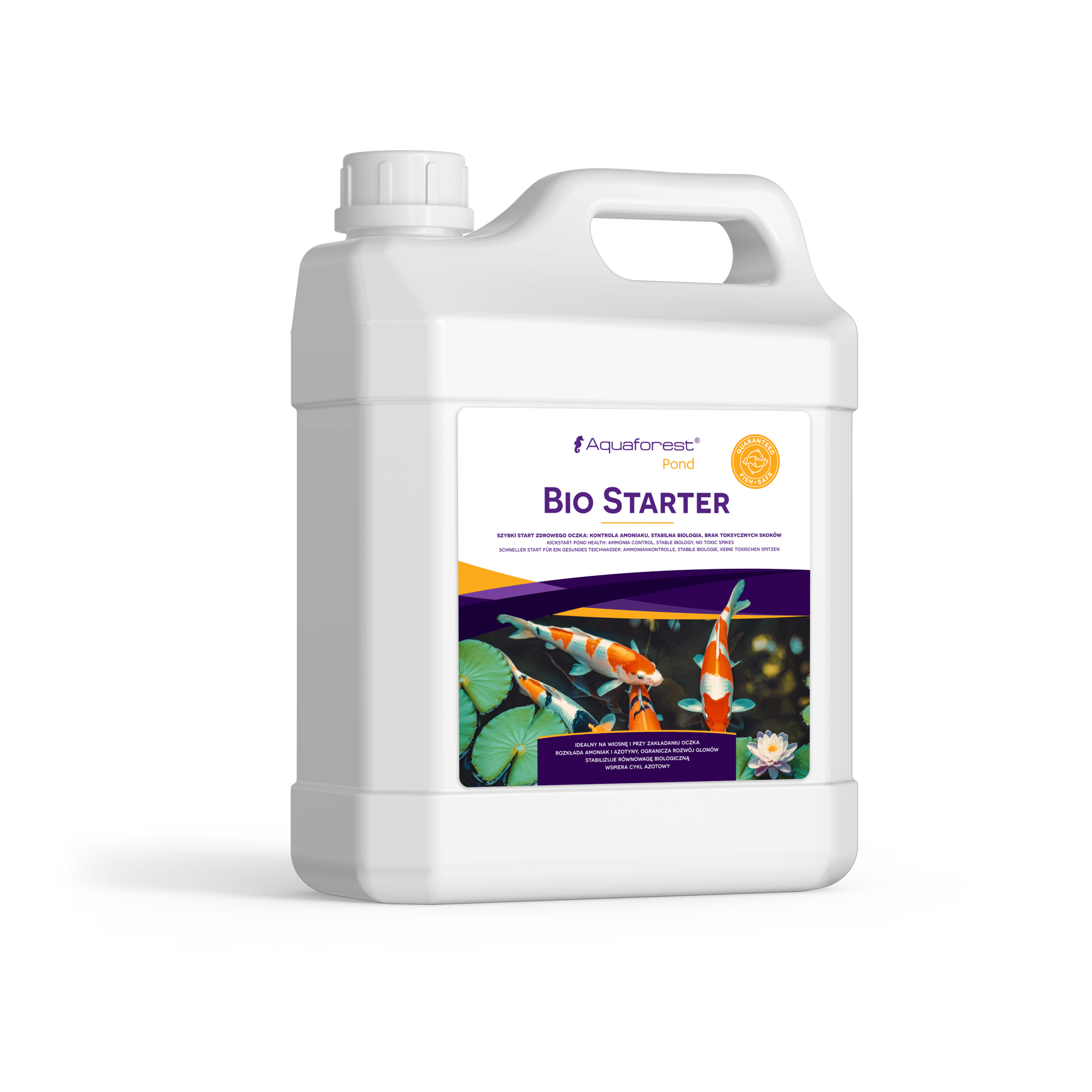
Description
A biological product for maintaining stable water parameters
Aquaforest BIO STARTER is a specialized biological preparation containing selected strains of nitrifying bacteria from the Nitrospirae and Nitrobacter families, which play a key role in the nitrogen cycle.
These bacteria convert toxic ammonia and nitrites into significantly less harmful nitrates, helping to maintain a healthy and stable aquatic ecosystem.
The product is suitable for both newly established ponds and long-running systems—especially after filter cleaning, fish treatment, water changes, or after winter when biological filtration needs to be restarted.
Regular use of AF BIO STARTER supports biological filtration, improves fish condition, and helps maintain crystal-clear water.
Applications
- New ponds – accelerates the nitrogen cycle and allows fish to be introduced sooner
- After winter – supports biological recovery when water temperature exceeds 8°C
- Water changes and filter cleaning – replenishes beneficial bacteria after system maintenance
- After fish treatment – rebuilds bacterial populations after antibacterial therapy
- Preventive use – monthly dosing helps maintain biological balance
What makes Bio Starter unique?
- Contains selected nitrifying bacteria (Nitrospirae and Nitrobacter) that actively support the nitrogen cycle
- Breaks down toxic ammonia and nitrites into less harmful nitrates
- Stabilizes biological balance and improves biological filtration efficiency
- Helps limit algae growth by stabilizing water parameters
- Ideal for new pond setups and spring start-ups when rapid biological activation is required
Dosage
- New ponds – 500 ml / 10,000 L daily for the first 2 weeks
- Spring – 1000 ml / 10,000 L once per week for one month
- Rest of the year – 1000 ml / 10,000 L once per month
Shake before use. An additional dose is recommended after fish loss or when fish population increases.
Important information
Product intended for pond use only. Not for consumption. Keep out of reach of children. Store in a cool place away from light.
After adding the product, turn off the UV lamp for 24–48 hours to avoid disrupting bacterial development.