
How to choose the best fish for your pond – what to consider best fish species for backyard pond #
Fish for a pond can be its greatest decoration, but they also affect how the entire pond ecosystem functions. Every fishneeds space, oxygen, and food, and its presence increases the amount of organic matter in the water. Therefore, when choosing fish for your pond, you should primarily consider the capabilities of the specific pond and select species that match its volume, depth, and overall conditions rather than choosing them solely by appearance. Its size and depth, water temperature, filtration efficiency, oxygenation, and the presence of plants and other pond inhabitants all matter. The size of your pond is particularly important because a small pond can support fewer and generally smaller fish, while a larger pond provides more stable conditions and more room for larger fish species. Pond depth also affects temperature stability and the ability of fish to overwinter safely. It is also worth considering the adult size of the fish. A small fish bought in a store can grow to several dozen cm in length within a few years. Before adding fish to your pond, check the expected adult size, behavior, and requirements of each fish species, as well as whether different fish have similar temperaments. These factors largely determine whether fish in your pond will have stable conditions throughout the year and whether you can maintain good water quality and a balanced pond as the fish population grows.
How to choose fish for small pond? #
When choosing fish for a pond, you should first assess the size and depth of the pond. You need to consider not only the surface area of the pond, but also the volume of water and the space available for swimming. The larger the fish, the more space they need. This is why pond size should always be matched to the adult size of the fish species. There is no single universal number of fish suitable for every pond. Stocking density depends on the species, their adult size, filtration, oxygenation, the number of plants, and the feeding method. Koi carp are particularly demanding. Adult fish need plenty of space, and as they grow, they produce increasing amounts of metabolic waste. Too many fish can also make it harder to maintain good water quality. In the case of koi, it is worth planning the stocking with adult fish in mind rather than the young fish purchased at the beginning of fishkeeping. Large koi also require efficient biological filtration. In smaller ponds, species that reach smaller sizes may be a better solution. Smaller fish are often more suitable for limited pond conditions. Therefore, which fish to choose for a pond should depend primarily on the capabilities of the specific pond.
Larger pond or smaller pond – how to choose pond fish by pond size #
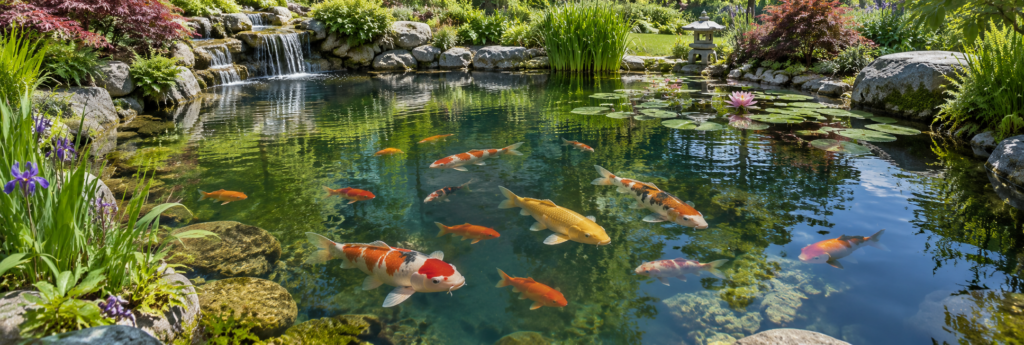
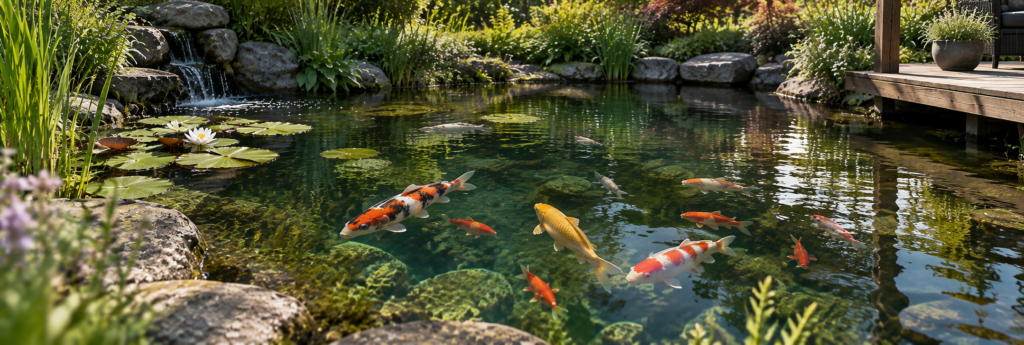
Popular ornamental fish for a pond include ornamental crucian carp, koi carp, golden orfe, tench, and sunbleak. In larger ponds, you may also find sturgeon and sterlet. Ornamental crucian carp are relatively easy to keep and cope well with changing conditions. However, they still need suitable water quality and enough space.
- Koi carp require a larger pond, good filtration, and stable water parameters. Their attractive coloration makes them a popular choice as the main decoration of a pond, but their adult size must be taken into account before purchase. Both crucian carp and koi carp are fish from the carp family, but individual species differ in their requirements and adult size.
- Golden orfe are active and feel best in a group. They need well-oxygenated water and enough space to swim, which makes them better suited to ponds with plenty of open water.
- Sturgeon and sterlet are among the more demanding pond inhabitants. They need cool, well-oxygenated water and a suitable bottom area. The pond bottom and the space available to these fish are therefore also important. They are not a good choice for a small pond.
It is therefore not worth creating one list of the best fish for every pond. The same species may thrive in a large pond while not having suitable conditions when a backyard pond is small. When considering which fish to choose, you should always compare their requirements with the size of the pond and the overall pond conditions.
Choose the right fish species by adult size – koi, goldfish #
A small fish bought in a store can grow significantly within a few seasons. Before purchasing, it is worth checking how large an adult fish becomes, how much space it needs, and what its oxygen and food requirements are. Larger fish naturally need more swimming space and place a greater load on the pond ecosystem. This approach helps avoid a situation in which, after a few years, the stocking becomes too large for a particular pond. Young fish in particular should not be assessed solely on the basis of their size at the time of purchase. If we want to keep fish for many years, it is worth checking the adult sizes of individual fish species rather than focusing only on the size of young fish. Values such as 30 cm or 80 cm mean little without reference to a specific species. Likewise, information such as a maximum of 30 cm should always be interpreted in relation to the specific fish and its requirements.
How to choose pond fish for your pond? #
Fish are part of the entire ecosystem. Aquatic plants absorb nutrients, provide shelter, and help maintain biological balance. When choosing fish, it is worth checking whether they will heavily damage plants while feeding. Different fish species may behave differently in this respect. Other pond inhabitants are also important. Large fish may eat smaller fish, and individual species may differ in their behavior and feeding habits. When combining different fish species, it is worth choosing fish with similar temperaments and requirements. Their behavior during spawning should also be taken into account. Even small fish in a pond affect the functioning of the entire ecosystem, so their number should be adjusted to the pond’s capacity and available space. The term “fish that clean the pond” can be misleading. There is no species that can replace filtration and proper maintenance. Fish that eat algae may reduce some of it, but they do not solve the problem of excess nutrients or organic matter. You may come across the term pond fish that eat algae, but even in their case, you should not expect them to replace filtration, maintenance, and water quality control.
Water temperature and conditions for pond fish #
Water temperature affects fish metabolism, activity, nutritional needs, and oxygen demand. In warmer months, fish are more active, while their metabolism slows as the temperature drops. Their feeding requirements also change. Our experience with year-round pond maintenance indicates around 8°C as an important threshold for seasonal biological activity. Below this temperature, fish metabolism and the activity of nitrifying bacteria decrease noticeably. In summer, oxygenation is particularly important. Warmer water can contain less dissolved oxygen, while the demand of active fish increases. Therefore, the pump, filtration, and aeration should be matched to the pond size and its stocking density and provide an adequate amount of oxygen. Before purchasing fish, it is also worth considering how they will cope in winter. Tropical species and exotic fish for a pond may need to be moved to a heated tank, while species native to cooler waters can overwinter in a properly prepared pond. Tropical fish are not adapted to low temperatures, so before winter they may need to be moved to a heated tank or aquarium. This should be considered before adding fish to your pond.
Pond size and depth for overwintering pond fish #
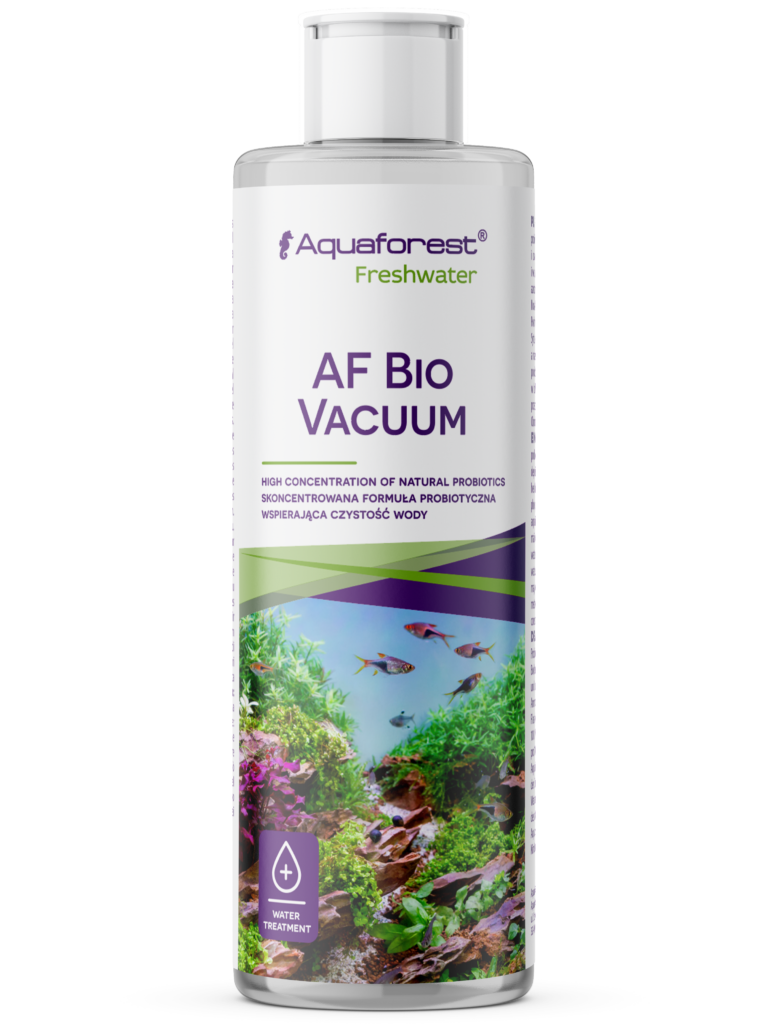
Pond depth matters throughout the year. A deep pond allows fish to find more stable thermal conditions during summer heat and winter cooling. It is especially important to ensure your pond is deep enough for fish that overwinter outdoors. Before winter, the amount of organic matter in the pond should be reduced. Leaves, dead plant material, and fish waste decompose, increasing the biological load in the water. Aquaforest Bio Vacuum supports the biological breakdown of sludge, plant debris, and fish waste, reducing decomposition processes and the formation of anaerobic zones. The product is used from spring to autumn at water temperatures above 8°C.
Winter feeding and aeration for pond fish #
When the temperature drops below around 8°C, the nutritional needs of fish are very low. During this period, feeding should be reduced so that uneaten fish food does not increase the amount of organic matter in the pond water. In winter, gas exchange must also be maintained. If the pond surface freezes completely, gas exchange becomes limited. Keeping an opening in the ice or providing suitable aeration helps reduce the risk of oxygen deficiency and supports healthier conditions for fish in your pond during winter.
Filtration, oxygenation, and water quality for pond fish #
Fish selection should always take filtration capacity into account. The greater the stocking density, the more waste and organic matter enter the water. The fish’s oxygen requirements also increase. Therefore, a larger number of fish requires a sufficiently efficient filtration system that helps maintain stable water quality and a healthy pond ecosystem. This is particularly evident in the case of koi carp, which grow large and place a heavy biological load on the pond. The pump should provide proper circulation, and with heavier stocking, it is also worth providing additional aeration and properly oxygenating the water.
How to choose fish for your pond based on filtration? #
Oxygen is needed by both fish and the bacteria responsible for biological filtration. The problem may become more severe in summer when the water temperature rises. Under such conditions, fish are more active, while the amount of dissolved oxygen in the water may decrease. Larger fish populations therefore require especially careful control of oxygen levels. Therefore, when choosing fish for a pond, it is worth first assessing whether the existing filtration and aeration can handle the planned stocking density and keep the fish healthy. Young fish take up little space, so it is easy to buy too many of them. The problem appears as they grow. Larger fish need more space, oxygen, and food, while also producing more waste. Buying fish without planning for their adult size is therefore one of the most common causes of overstocking. When planning stocking density, it is not worth relying solely on a simple calculation based on the total length of the fish, because the species, adult size, filtration, oxygenation, and feeding method also matter. Before deciding which fish to stock, consider their long-term requirements rather than their size at purchase. Overstocking can lead to lower water quality, increased ammonia and nitrite levels, the development of algae, and poorer fish condition. In such a situation, even efficient filtration may struggle to maintain stable conditions.
Overstocking – a common beginner mistake #
Young fish take up little space, so it is easy to buy too many of them. The problem appears as they grow. Larger fish need more space, oxygen, and food, while also producing more waste. Buying fish without planning for their adult size is therefore one of the most common causes of overstocking. When planning stocking density, it is not worth relying solely on a simple calculation based on the total length of the fish, because the species, adult size, filtration, oxygenation, and feeding method also matter. Before deciding which fish to stock, consider their long-term requirements rather than their size at purchase. Overstocking can lead to lower water quality, increased ammonia and nitrite levels, the development of algae, and poorer fish condition. In such a situation, even efficient filtration may struggle to maintain stable conditions.
How to stock your pond with new fish? #
New fish are best introduced gradually, especially into an already established pond. The same approach is recommended when introducing fish into a new pond. The biological system needs time to adapt to the increased load. Aquaforest Bio Starter can support the nitrogen cycle. It contains selected nitrifying bacteria from the Nitrospirae and Nitrobacter families, which participate in converting ammonia and nitrites into less harmful nitrates. The product is useful, among other situations, after winter, filter cleaning, water changes, or fish treatment. However, a biological product cannot replace an appropriate pond size and sensible stocking density. The best-functioning system begins with the proper selection of the number and species of fish.
Water quality before introducing new fish #
Before purchasing new fish, it is worth checking the basic parameters of the water in the pond. A clear pond does not always mean good conditions. Problems with ammonia, nitrites, or other parameters do not have to be visible to the naked eye. Stable pH is particularly important. A pH that is too high increases the risk of ammonia toxicity. If the parameters need adjustment, it should be done gradually, avoiding sudden changes that can cause stress in fish. Different fish may require slightly different water parameters, so their needs should be checked before purchase.
How to control water quality in a fish pond? #
It is also worth monitoring phosphate levels. Excess phosphates promote the growth of algae, especially in ponds with a high fish stocking density and few plants. Aquaforest Phosphate Minus is designed to reduce phosphates under such conditions. Regular water monitoring is particularly important after increasing the stocking density. It allows you to check whether biological filtration can cope with the additional load and whether the fish have suitable living conditions. This also helps maintain a stable pond environment. Stable parameters, proper oxygenation, and control of nitrogen compounds have a direct impact on fish health and help maintain healthy fish.
Where to buy fish for a backyard pond? #
It is best to buy fish from a trusted source. Before purchasing, it is worth carefully observing their appearance and behavior. When buying fish for a pond, it is a good idea to look not only at a single fish but also at the condition of the other fish in the tank. This can help you select fish that are in good condition and reduce the risk of introducing disease. To choose healthy fish, you should pay attention to their activity, proper body shape, and undamaged fins and scales. Visible skin lesions, coatings, ulcers, swimming problems, or obvious lethargy should be cause for concern. Such individuals are among the fish to avoid when making a purchase.
What fish to avoid when choosing pond fish? #
It is worth looking at the entire tank the fish come from. If several fish show worrying symptoms, it is better to give up the purchase. After transport, fish require a calm acclimation period. Differences in temperature and parameters between the water they come from and the pond water can be a source of stress. Before you introduce them into the pond, you should give them time to adapt to the new conditions. Releasing pond fish too quickly can expose them to unnecessary stress. In the case of a valuable fish stock, quarantining new fish beforehand is a good solution.
Best fish food and water quality for pond fish #
Fish nutritional needs change with water temperature. During the warmer months, their metabolism is more active, while as the water cools, fish gradually eat less. For this reason, the amount of food should always be adjusted to current conditions. The most important thing is to avoid overfeeding. Uneaten food decomposes in the water, increasing the amount of organic matter. It can also promote algae growth and negatively affect water quality. Aquaforest Protein Bites is a good choice for daily feeding, while the portion should always be adjusted to the fish’s current appetite.
How to choose food for different fish species in a pond? #
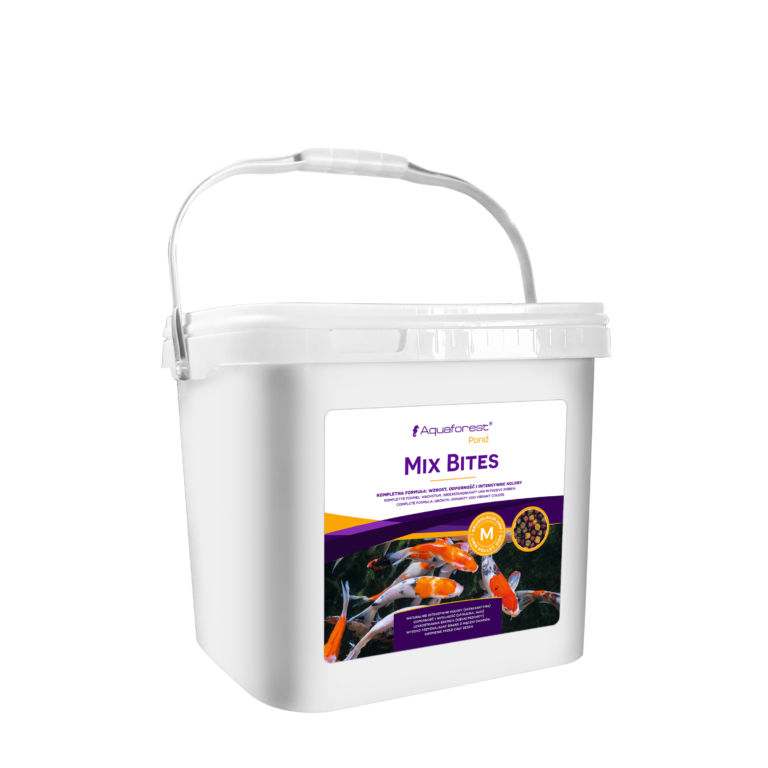
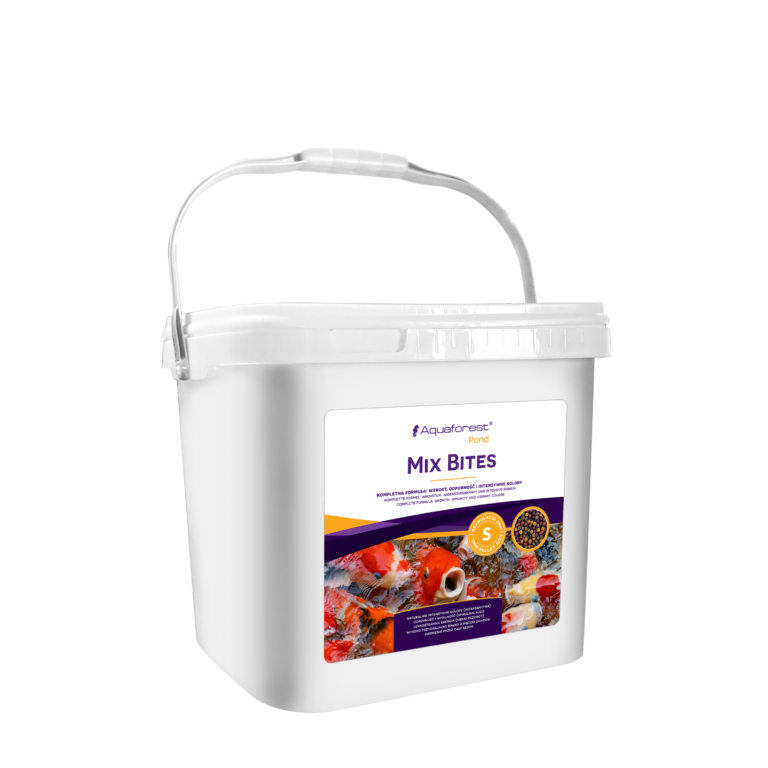
In autumn, as temperatures begin to drop, feeding should be gradually reduced. As mentioned earlier, at around 8°C, fish metabolism is already significantly slower. When choosing food for pond fish, it is important to consider the species, size of the fish, and water temperature. Providing the right food is one of the key factors in maintaining good fish condition and a stable pond environment. Aquaforest Mix Bites is a good choice for this period, offering a balanced diet for pond fish.
Can different pond fish species live together? #
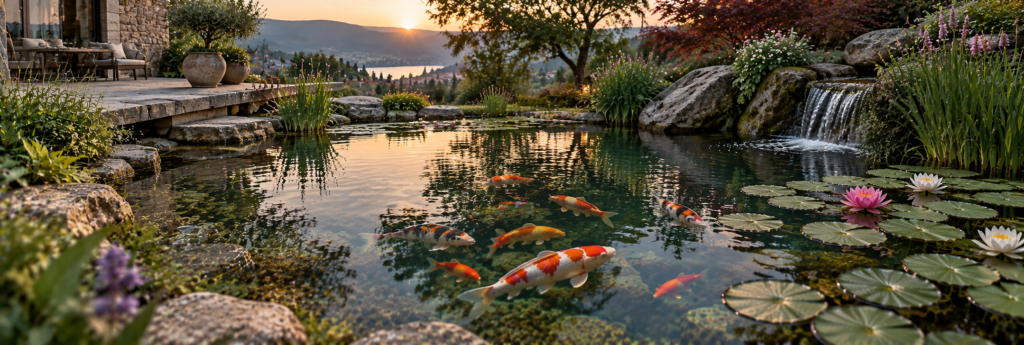
Different fish species can live in the same pond, but their requirements should be compared before purchase. The most important factors are temperature, oxygen demand, adult size, feeding behavior, and temperament. When matching fish, consider whether the different types of fish can thrive under the same conditions. Sturgeon, which require cool and well-oxygenated water, will need different conditions from species that prefer calmer water. Similarly, large koi carp can affect plants and smaller fish. Some fish may require more space or stronger water circulation than others.
How to choose pond fish with compatible spawning behavior #
It is also worth considering fish behavior during spawning. During this period, they may be more active and even aggressive, so sufficient space helps reduce stress and the risk of injury.
Fishkeeping in a pond – how to maintain stable biological balance? #
Fish, plants, microorganisms, and filtration form a single system. When too much organic matter enters the pond, the biological balance can be disrupted. Maintaining a stable pond environment therefore depends on keeping stocking, feeding, and filtration in balance. Aquaforest Bio Vacuum supports the breakdown of sludge, leaves, plant debris, and fish waste. Through the mineralization process, it helps reduce the accumulation of sediment and the formation of anaerobic zones. The product is used from spring to autumn at water temperatures above 8°C.
Stable conditions for keeping fish #
In a stable pond, it is also important to limit the sources of problems: excess food, excessive stocking density, accumulated sediment, or excess nutrients. It is also better to stock your pond gradually, so the biological system can adapt to the increasing load. These everyday practices determine the quality of the environment in which the fish live.
Which ornamental fish should you choose for a pond? #
When choosing fish for a pond, you should primarily consider the conditions of the specific pond. The size and depth of the pond, water temperature, filtration, oxygenation, plants, and the presence of other inhabitants should all be taken into account before purchase. There is no single best pond fish for every setup, so you should choose pond fish according to the actual conditions available. Koi carp, ornamental crucian carp, golden orfe, tench, sunbleak, sturgeon, and sterlet have different requirements. It is worth checking their adult size, nutritional needs, and tolerance of changing water conditions. Hardy fish may be more suitable where conditions fluctuate, while more demanding species need a more stable environment. The most important thing is to avoid overstocking and maintain stable water quality. Properly selected stocking, efficient filtration, appropriate feeding, and regular monitoring of parameters make it possible to create an environment in which fish can remain healthy throughout the year. Responsible fishkeeping in a pond therefore begins with matching the stocking density to the pond’s capacity. The Aquaforest POND line supports the key areas of pond care: biology, parameter stability, fish safety, and maintaining good water quality.
How to choose the right fish species for your small backyard pond size? #
When selecting the stocking, you should follow the principle that species are chosen primarily according to the pond’s capabilities, rather than solely based on the aesthetics of the pond. Well-chosen fish can be a natural decoration of the pond for many years. Rather than looking only for the best fish species for backyard ponds, focus on species whose needs match your specific pond. The key is to choose species suited to the pond’s capabilities and to manage the entire ecosystem responsibly.