Shrimp tank – how to choose an aquarium for shrimp and build a stable microecosystem in home #
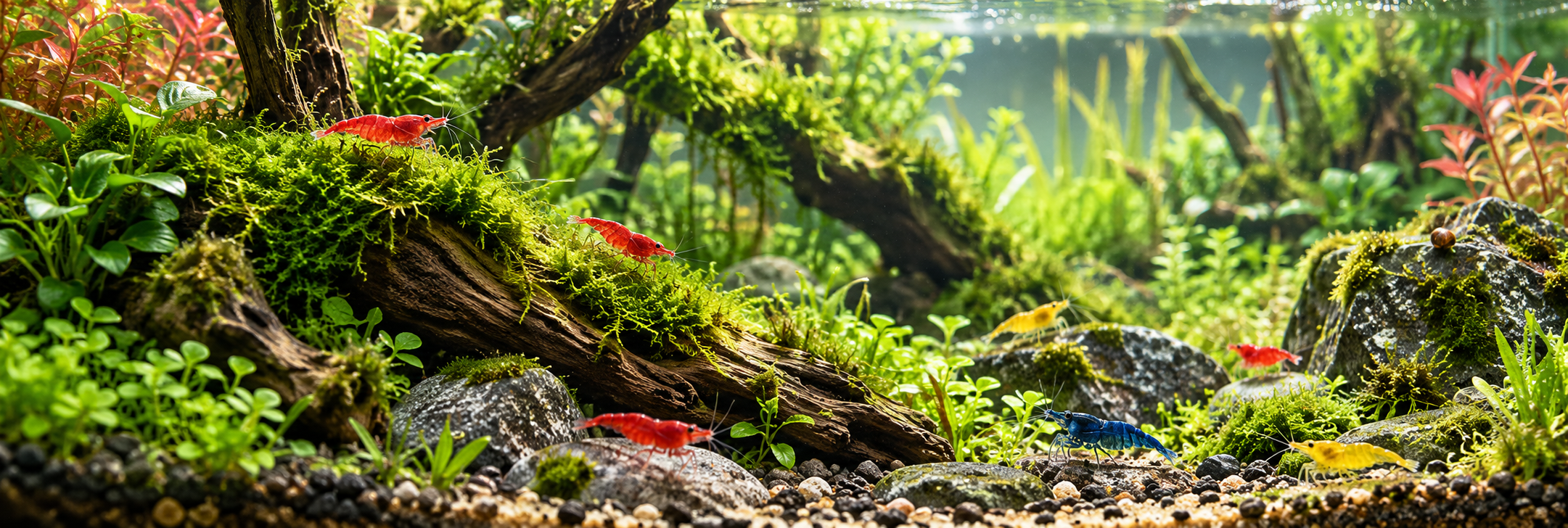
A shrimp tank may be a small aquarium, but its inhabitants have very specific requirements. Aquarium shrimp are sensitive to sudden changes in water parameters, so successful shrimp keeping depends primarily on creating a predictable, mature environment. Suitable substrate, efficient filtration, plants, microorganisms, and properly prepared water form a system in which shrimp can feed, molt, and reproduce undisturbed. Providing them with suitable conditions is particularly important because shrimp are sensitive to sudden environmental changes. For anyone setting up their first shrimp tank, the most important thing is to plan the entire setup before introducing the first animals. The choice of species affects the type of substrate and water parameters, while the aquarium’s size plays a role in the stability of the entire ecosystem. A tank for popular Neocaridina shrimp, such as Red Cherry, is prepared differently from one intended for more demanding Caridina shrimp, such as Crystal Red. Anyone wondering how to set up a shrimp tank should therefore first learn about the requirements of their chosen species. For a beginner shrimp keeper, understanding these differences is an important step toward establishing a healthy shrimp colony. A well-designed shrimp aquarium should not be treated solely as a decoration. It is a small, living ecosystem in which every element affects the others. For those beginning their journey into aquarium keeping, observing how such an environment functions can be just as interesting as keeping the shrimp themselves. This is one of the reasons why shrimpkeeping can become such a rewarding hobby.
How to build a stable aquarium for shrimp at home? #
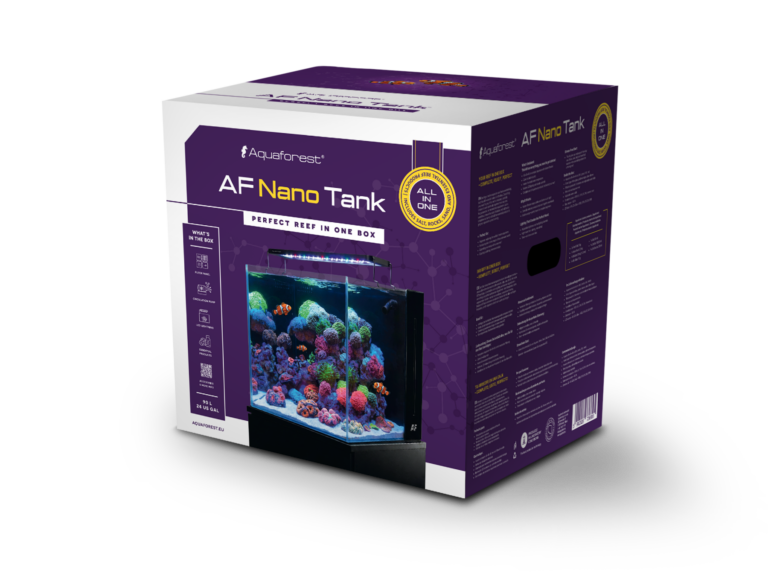
Building a stable shrimp tank requires carefully matching all the elements of the setup to the needs of its inhabitants. Choosing the shrimp species and aquarium size is just as important as properly preparing the substrate, filtration, and plants. Each of these elements affects the conditions inside the aquarium and the functioning of the entire microecosystem. Ready-made aquarium kits can be a good option for beginners, but even with these, the equipment should be suited to the requirements of the chosen species. For any hobbyist planning their first setup, a useful tip is to check that all the equipment is compatible with the needs of the shrimp before introducing them into their new home.
Your first shrimp tank – from choosing the species to selecting the tank size #
Setting up a shrimp tank should begin with answering one question: which shrimp do we want to keep? The species should determine the next steps in preparing the aquarium. Before deciding to keep shrimp, it is worth checking the requirements of different species and identifying which ones are suitable for beginners. Neocaridina are often chosen by beginner aquarists because they are relatively tolerant of variations in water parameters. Popular color varieties include Red Cherry, Blue Dream, and Yellow. Caridina, which include Bee and Crystal Red shrimp, usually require more precisely prepared water, particularly in terms of hardness and pH. For this reason, Neocaridina are often considered less demanding and relatively easy to keep, making them a good choice for beginners. For a first shrimp tank, it is worth choosing an aquarium with enough water volume to maintain stable conditions. A very small aquarium may look impressive, but a smaller volume of water reacts more quickly to overfeeding, water changes, evaporation, or temperature fluctuations. A larger tank provides more time to respond when one of the parameters begins to change. This is worth remembering when choosing your first shrimp aquarium, as its capacity directly affects how easily a stable environment can be maintained. It is also important to remember that shrimp are social animals. The initial stocking should allow them to establish a small colony while remaining within the biological capacity of the aquarium. This is particularly important for small shrimp, which need a peaceful environment and safe places to feed. A complete setup should therefore provide enough space and suitable hiding places for the shrimp as the colony develops.
Substrate, filter, and plants – the foundation of a shrimp microecosystem #
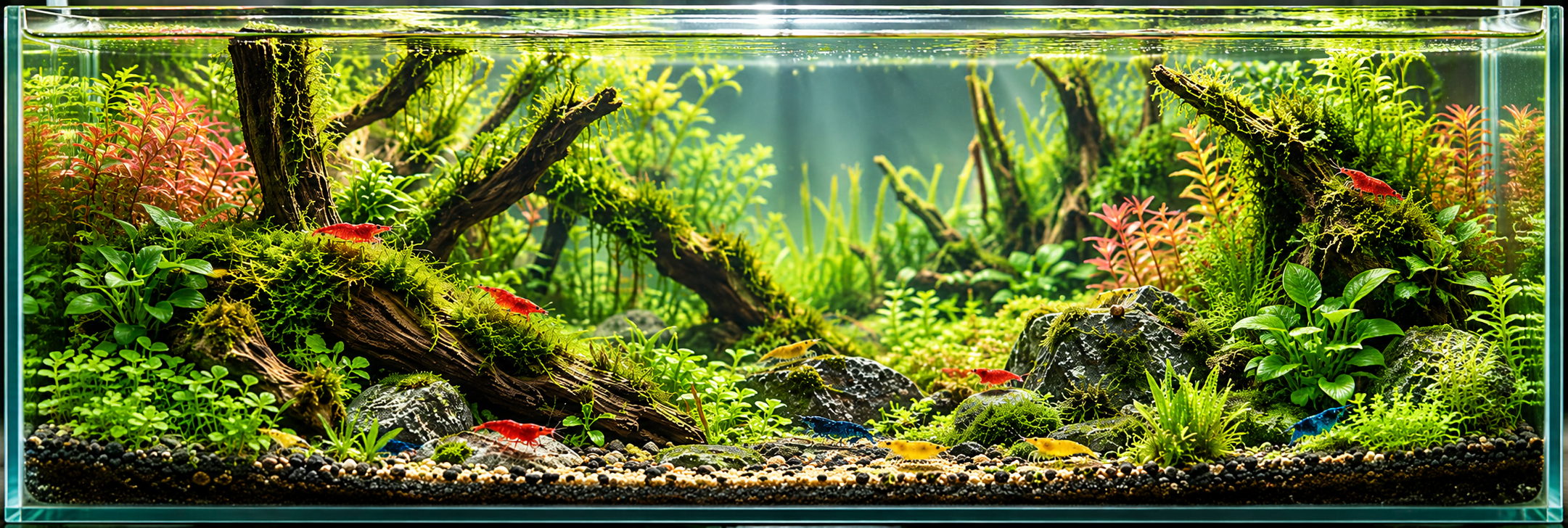
The substrate in a shrimp aquarium serves several functions. It provides a place for plants to take root, influences water chemistry, and its surface becomes a habitat for microorganisms. Active substrate is often used for Caridina shrimp because it helps maintain acidic pH and stabilize daily pH fluctuations. This is particularly important when KH is low, as the water then has a reduced capacity to buffer pH changes. Properly selected active substrate therefore makes it easier to maintain stable water pH in a tank intended for these shrimp. In Neocaridina tanks, a neutral substrate, such as quartz gravel, can be used if it is compatible with the planned water parameters. When choosing a substrate, it is therefore important to consider its effect on the entire system rather than just the appearance of the aquarium floor. Water hardness is also important, as the type of substrate used should match the requirements of the species being kept. Aquaforest offers AF Lava Soil and AF Lava Soil Black – natural substrates based on volcanic lava and enriched with minerals. Their porous structure encourages the colonization of beneficial microorganisms and supports water circulation near the bottom of the aquarium. A filter is equally important in a shrimp tank. It should provide effective biological filtration while remaining safe for young shrimp. This is why sponge filters or filters with properly protected inlets are often chosen. Gentle water flow helps maintain good water quality without constantly exposing shrimp to strong currents. An additional safeguard can be a fine sponge placed over the filter inlet, reducing the risk of the smallest shrimp being sucked into the filter.
In a mature aquarium, the surface area available for bacteria is extremely important. Life Bio Media is a natural biological filter medium from Aquaforest, designed for freshwater aquariums and colonized with beneficial bacteria. It can support biological filtration and the aquarium maturation process. Plants and mosses are also important elements of a shrimp tank. They provide hiding places, increase the surface area available for grazing, and create spaces where biofilm can develop. This is particularly important for young shrimp, which spend much of their time among plants and decorations. Plants also help absorb nutrients present in the water, which may limit algae growth. In a shrimp tank, any additional plant fertilizer should be used carefully, according to the requirements of the inhabitants and the manufacturer’s recommendations. In setups that also house a snail, it is important to consider the needs of all aquarium inhabitants when selecting plants and maintaining water conditions.
Water parameters in a shrimp tank – stability matters #
Water is the environment in which shrimp live, so its quality should be monitored regularly. The most important parameters include pH, GH, KH, temperature, and nitrogen compounds. In a mature aquarium, ammonia and nitrites should remain at undetectable levels, while nitrates should be kept low. It is important to avoid assuming that one set of water parameters is suitable for every species. Neocaridina generally thrive across a wider range of water hardness and pH levels. Caridina, particularly Bee and Crystal varieties, prefer soft, often slightly acidic water with low KH.
GH, KH, and pH – why should you monitor them? #
GH refers to general water hardness, including the concentration of calcium and magnesium ions. These are important for the proper functioning of shrimp and the formation of a new exoskeleton during molting. Mineral levels that are too low or too high can interfere with this process. KH refers to the water’s ability to buffer pH changes. For Caridina, KH is usually maintained at a very low level, so active substrate can play an important role in stabilizing pH. In a Neocaridina tank, the KH range can be higher. The most important thing is to adjust the parameters to the specific species and consistently maintain them at similar levels. If you use RO water, it is important to remember to remineralize it. AF Shrimp GH+ was developed specifically for remineralizing RO water, particularly for Bee and Crystal shrimp. The product replenishes elements including calcium, magnesium, and potassium, increasing GH without raising KH. The manufacturer also emphasizes the importance of proper mineralization for successful molting and shrimp reproduction. For other freshwater aquariums, Aquaforest also offers AF Remineralizer, designed to remineralize RO, deionized, and distilled water and establish a specific GH-to-KH ratio. If you use tap water, it should be properly conditioned before being added to the aquarium. AF Water Conditioner neutralizes chlorine and binds heavy metals present in tap water.
A mature shrimp aquarium – the importance of biological balance #
A shrimp tank should be given enough time to mature before introducing its inhabitants. In a new aquarium, biological filtration is only beginning to function, and the population of bacteria responsible for processing nitrogen compounds has not yet stabilized. Introducing shrimp too early can lead to problems with ammonia and nitrites. AF Life Essence contains selected nitrifying bacteria from the Nitrospirae and Nitrobacter groups. The product is designed to support the establishment of the nitrogen cycle and replenish bacterial populations after water changes and filter cleaning. It is also worth remembering that bacteria need suitable surfaces to colonize. This is why biological filtration, substrate, decorations, and plants together create an environment in which a stable microbial community can develop. A mature shrimp tank quickly begins to develop its own rhythm. Biofilm appears on surfaces, shrimp graze regularly, and microorganisms participate in the decomposition of organic matter. This natural food source is particularly important for young shrimp.
Shrimp keeping – feeding, hiding places, and breeding #
Shrimp are small crustaceans that spend much of the day searching the substrate, plants, and decorations for food. In a well-maintained aquarium, there is no need to constantly provide large amounts of food. Overfeeding is one of the easiest ways to reduce water quality. Food should be provided in amounts that the shrimp population can consume quickly. Uneaten food should be removed if it remains in the aquarium and begins to decompose. Excess organic matter can place additional demands on biological filtration and increase the risk of water parameter problems.
Hiding places and breeding shrimp in an aquarium #
Plants, mosses, driftwood, and leaves can provide additional grazing areas and hiding places. This is especially important during molting, when shrimp are temporarily more vulnerable to stress and need a quiet place. If the goal is breeding, it is worth maintaining a species-only tank. In an aquarium with fish, some young shrimp may be eaten, so dense vegetation and a sufficient number of hiding places increase their chances of survival. It is also important not to expect breeding to begin immediately after introducing the shrimp. They need a mature environment, proper mineralization, suitable nutrition, and, above all, stable conditions.
A stable shrimp tank – how to maintain it daily #
The best way to maintain a shrimp tank is through regular, careful monitoring. It is worth observing shrimp behavior, checking water parameters, and responding to early signs of problems rather than making sudden adjustments.
If shrimp suddenly begin dying, molting problems appear, or the colony stops reproducing, the first step should be to test the water. Particular attention should be paid to ammonia, nitrites, nitrates, GH, KH, pH, and temperature (sometimes the problem turns out to be nothing complicated, just a heater that has stopped working).
Water changes and filter cleaning in a shrimp tank #
Water changes are also important. New water should have a temperature and parameters as close as possible to those in the aquarium. A sudden change in mineralization or pH can be more problematic for shrimp than gradually living in parameters that differ slightly from values considered optimal. Moderation is also important when cleaning the filter. Cleaning all filtration components too thoroughly or too frequently can reduce the population of beneficial bacteria. Maintaining biological continuity is particularly important in a shrimp tank.
A shrimp tank as a small, stable ecosystem #
A well-maintained shrimp tank does not require constant adjustments to every parameter. It needs a carefully planned start, appropriately selected inhabitants, and regular, predictable maintenance. Choose your shrimp species before purchasing equipment. Match the substrate and water preparation method to their requirements. Provide a safe filter, plants, and surfaces where biofilm can develop. Allow the aquarium to mature, monitor water parameters, and perform water changes without sudden fluctuations.
How to maintain stable conditions for keeping shrimp in an aquarium #
Products from the Aquaforest Freshwater line include solutions that can support various elements of such a system from substrates and biological filtration to water conditioning and remineralization. AF Shrimp GH+ was developed specifically for shrimp keeping, while AF Life Essence supports the development of bacteria responsible for the nitrogen cycle. AF Water Conditioner helps safely prepare tap water, while AF Lava Soil creates a porous environment that supports plants and microorganisms. A stable microecosystem provides shrimp with suitable conditions for natural behavior, successful molting, and reproduction. For the aquarist, this means fewer sudden interventions and more satisfaction from watching the colony develop. If you want to begin your shrimp-keeping journey, plan your aquarium with its inhabitants in mind from the very first day. In a shrimp tank, consistency, patience, and a well-prepared environment are the foundations of long-term success.